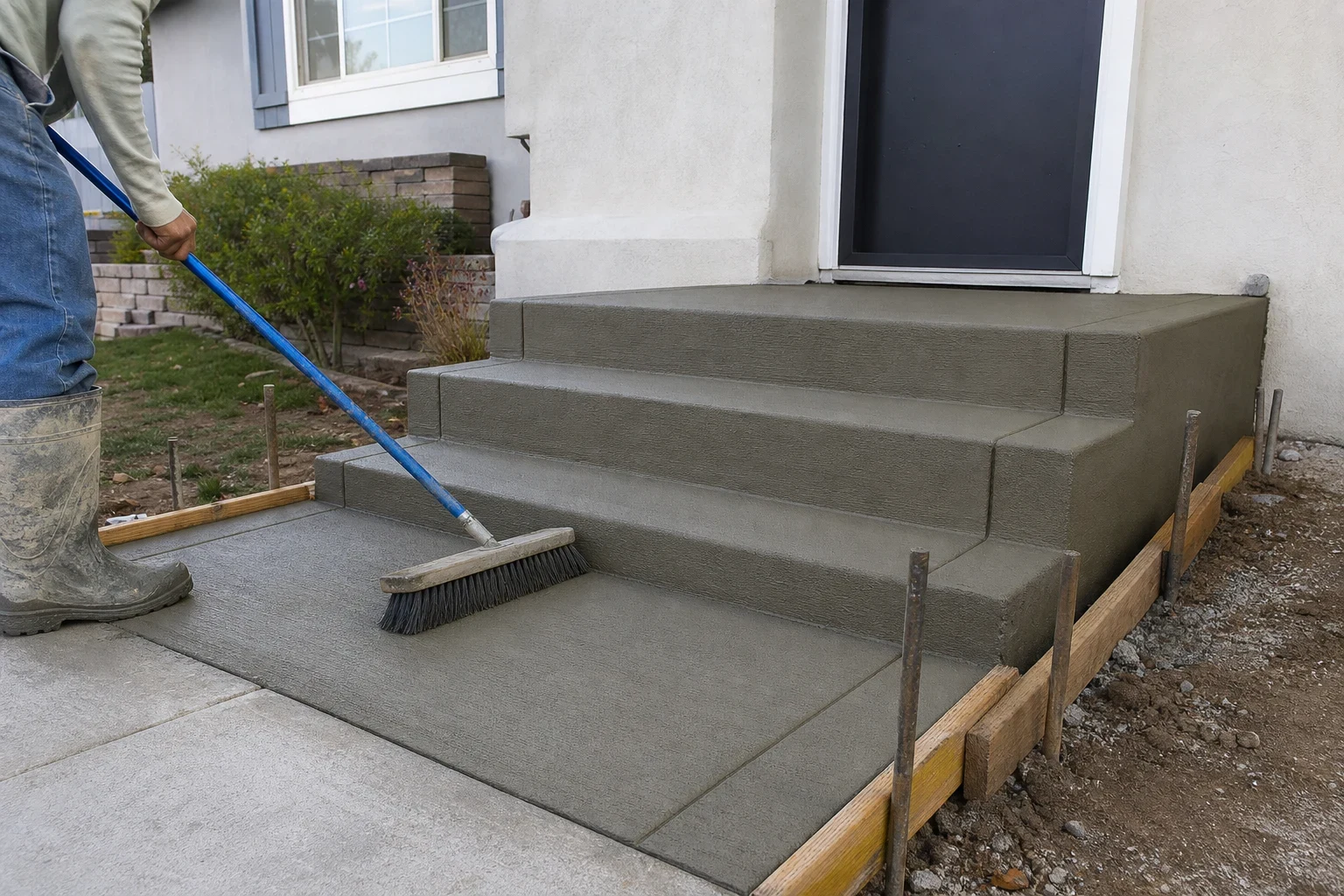
What Type of Concrete Is Best for Building Steps in Orange?
The mix matters, but so do the stiffness of the pour, the steel inside it and how the steps are cured afterward.
What type of concrete is best for building steps?
For most home steps, the best choice is a structural ready-mix concrete rated around 3,500 to 4,000 psi, placed fairly stiff, reinforced with rebar and finished with a broom texture for grip. Around Orange, where hard freezes are rare, a well-compacted base and careful curing in dry heat matter more than special additives. Talk it through at (714) 410-5411.
What strength of concrete should steps be poured with?
Steps take more abuse than a flat slab. Every tread edge, called the nosing, gets hit by heels, dollies, trash bins and the occasional dropped planter. A mix rated in the 3,500 to 4,000 psi range gives those edges enough strength to stay sharp for years instead of chipping off along the front.
Lower-strength mixes that work fine for a garden path tend to wear and crumble at the corners of steps. Going much higher than about 4,000 psi rarely adds anything for a residential stoop or a short flight of stairs off a patio, so we match the strength to the job rather than overselling a premium mix you do not need.
Why the stiffness of the mix matters on stairs
Concrete that arrives soupy is easier to pour, but it slumps out of the riser forms and leaves soft, weak surfaces. For steps we want a stiffer mix that holds its shape when the forms come off, so each riser stays straight and each tread stays level.
The most common mistake we see on do-it-yourself steps is adding water at the site to make the concrete easier to move. Extra water weakens the finished surface and leads to dusting and shrinkage cracks. A smaller stone in the mix can also help on narrow forms, because it fills tight corners and gives cleaner, sharper nosings.
- Stiffer, lower-slump mix so risers hold their shape
- No water added on site beyond what the mix design allows
- Smaller aggregate where forms are tight or the edges are detailed
- Enough cement paste to finish smooth nosings without voids
Bagged mix or a ready-mix truck?
A single small stoop with two risers can be built well with high-strength bagged concrete, mixed in batches. The catch is consistency: each batch has to be mixed the same way, and the pour has to move fast enough that one batch does not start setting before the next one goes in.
For a full flight of stairs, steps tied into a new walkway or anything wider than a typical front door landing, a ready-mix truck is the better choice. The whole pour comes from one consistent batch, it goes in at once, and there are no cold joints hidden inside the steps. When you call, we will tell you plainly which approach fits your project and why.
What else makes concrete steps last besides the mix?
Good concrete on a poor base still fails. Steps are heavy, and if the soil underneath settles, they pull away from the house or tilt toward the yard. Much of the soil in Orange County has clay in it that swells when wet and shrinks when dry, so we dig out soft material and compact a gravel base before any forms go up.
Steel matters too. Rebar runs through the steps to hold them together, and dowels pin them to the existing foundation, porch slab or walkway so the new steps move with what they attach to. Then comes curing. Dry, warm days and Santa Ana winds can pull moisture out of fresh concrete too fast, which causes surface cracking, so we keep new steps damp or sealed with a curing compound while they gain strength.
- Compacted gravel base over firm soil
- Rebar inside the steps and dowels into existing concrete
- Broom or light texture finish for traction, especially near sprinklers and pools
- Slow, moist curing, with extra care on hot or windy days
What sizes do code and permits call for?
The California Residential Code sets limits for residential stairs: risers no taller than 7 3/4 inches, treads at least 10 inches deep, and every step in a flight within 3/8 inch of the others. That last rule is the one people feel most, because one step that is a little taller than the rest is where trips happen.
Whether your project needs a permit depends on the height, where the steps are and what they connect to, so it is worth checking with the city before work starts. We lay out the rise and run on paper first, set the forms to those numbers, and walk you through the plan before the concrete truck is ever scheduled.
More questions about concrete steps
How soon can we walk on new concrete steps?
Light foot traffic is usually fine after a day or two, once the surface has set firm. Hold off on heavy items like appliances or loaded dollies for about a week, and remember concrete keeps gaining strength for roughly a month.
Can concrete steps be stamped or colored?
Yes. Steps can be colored or stamped to match a patio or walkway, though we often keep a lighter texture on the treads so they stay grippy. We will talk through how a pattern looks on risers before you decide.
Do my new steps need a handrail?
Under the residential code, a handrail is generally required once a flight has four or more risers. Even shorter steps can benefit from one if someone in your home needs extra support.
Should new steps match the height of my existing door threshold?
The top step should sit just below the threshold so the door swings clear and water does not run inside. We measure from the threshold down and divide the total height evenly so every riser comes out the same.
Planning new steps for your home?
Call and you will talk with one person who handles your project from the first measurements to the final cleanup. We will go over the right mix, the step heights and the finish for your entry, and answer your questions along the way.