ServicesConcrete Courtyards
Concrete Courtyards in Orange
A courtyard is surrounded by your home, so every inch of the slab matters. We plan the slope, drains and wall clearances first, then pour a surface you can actually use. One person answers your questions and keeps the job on track from estimate to cleanup.
Concrete Built for a Space With Walls on Every Side
An open backyard can shed rainwater in several directions. A courtyard usually can't. With walls on three or four sides, water has to be collected and carried out, and the slab has to stay low enough that it never sits against stucco or reaches a door threshold. That is why we treat courtyard work as drainage work first and flatwork second.
Most of the courtyards we pour are either replacing tired, cracked concrete or turning a patch of dirt and pavers into a clean, level space for a table, planters or a fountain. Stucco is a common exterior on homes around Orange, and it has a metal edge along its bottom that lets trapped moisture drain out. We finish the new slab a little lower than that edge so the gap stays open and the wall can keep drying.
You will deal with one person the whole way. The same contact who measures your courtyard writes your estimate, schedules the crew, answers your calls on pour day and walks the finished slab with you.
What Your Courtyard Project Includes
- 01
Measuring and layout
We measure the space, note every door, wall, planter and hose bib, and mark where the slab will meet each one. You see the layout before anything is removed.
- 02
Tear-out and haul-away
If there is old concrete, brick or pavers in place, we break it out and haul it away. We protect nearby walls, windows and doors while we work.
- 03
Drains and slope
We set area drains where water naturally collects and slope the slab toward them and away from your home's foundation. Drain lines are run and tested before the pour.
- 04
Base and reinforcement
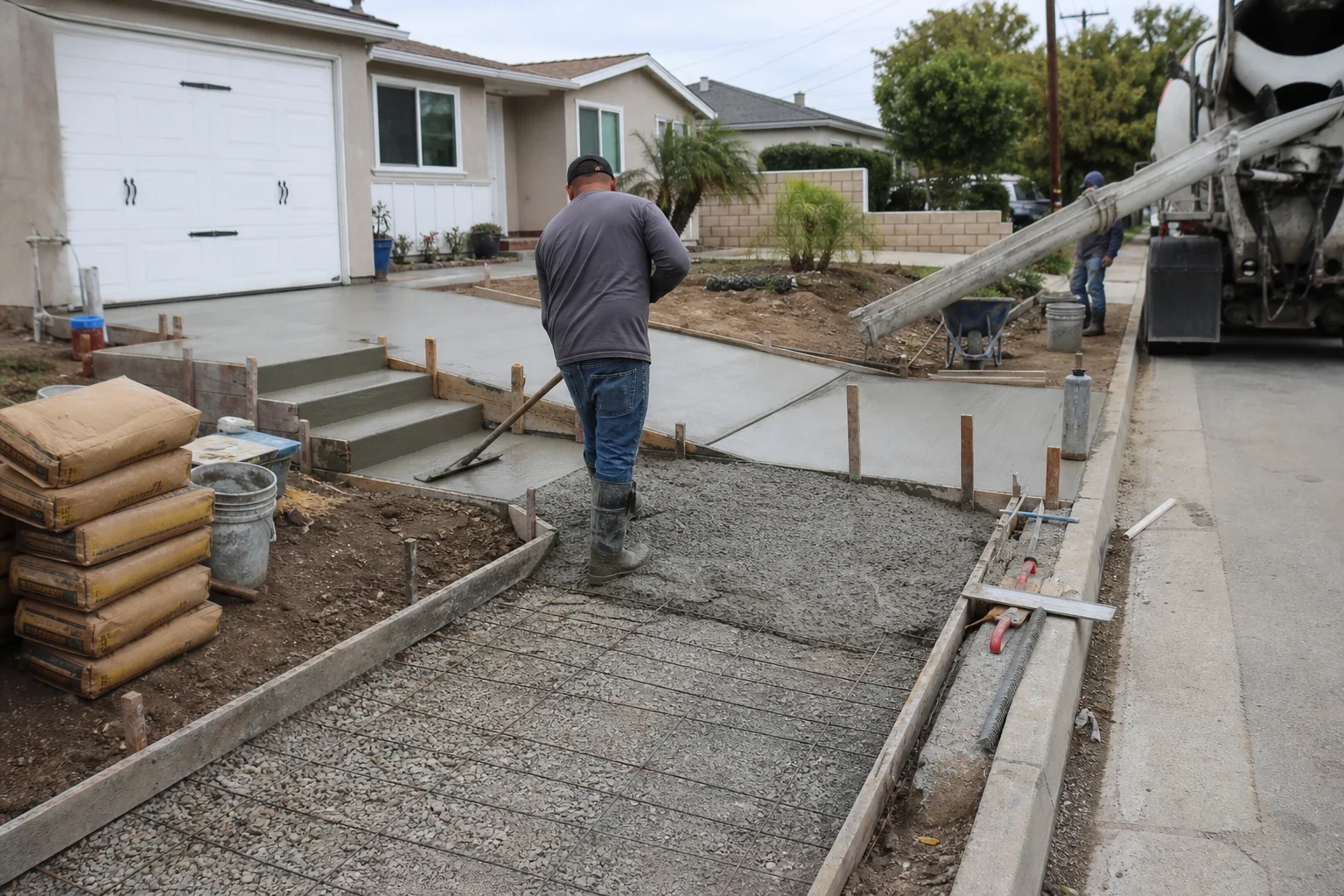
We grade and compact the soil, add a gravel base and place rebar or wire to help the slab hold up as the ground shifts with wet winters and dry summers.
- 05
Finish of your choice
Choose a broom finish, a smooth trowel edge with a light texture, a salt finish, exposed aggregate or color. If you want a patterned look, our stamped concrete page explains those options.
- 06
Joints and cleanup
We cut control joints so cracking stays in straight, planned lines, and we leave the courtyard swept and the debris gone.
Questions about Concrete Courtyards?
Call(714) 410-5411Signs Your Courtyard Is Ready for New Concrete
Water pools after rain
Puddles that sit for a day, or water that runs toward the house, mean the slope is wrong. New concrete is the chance to set it correctly.
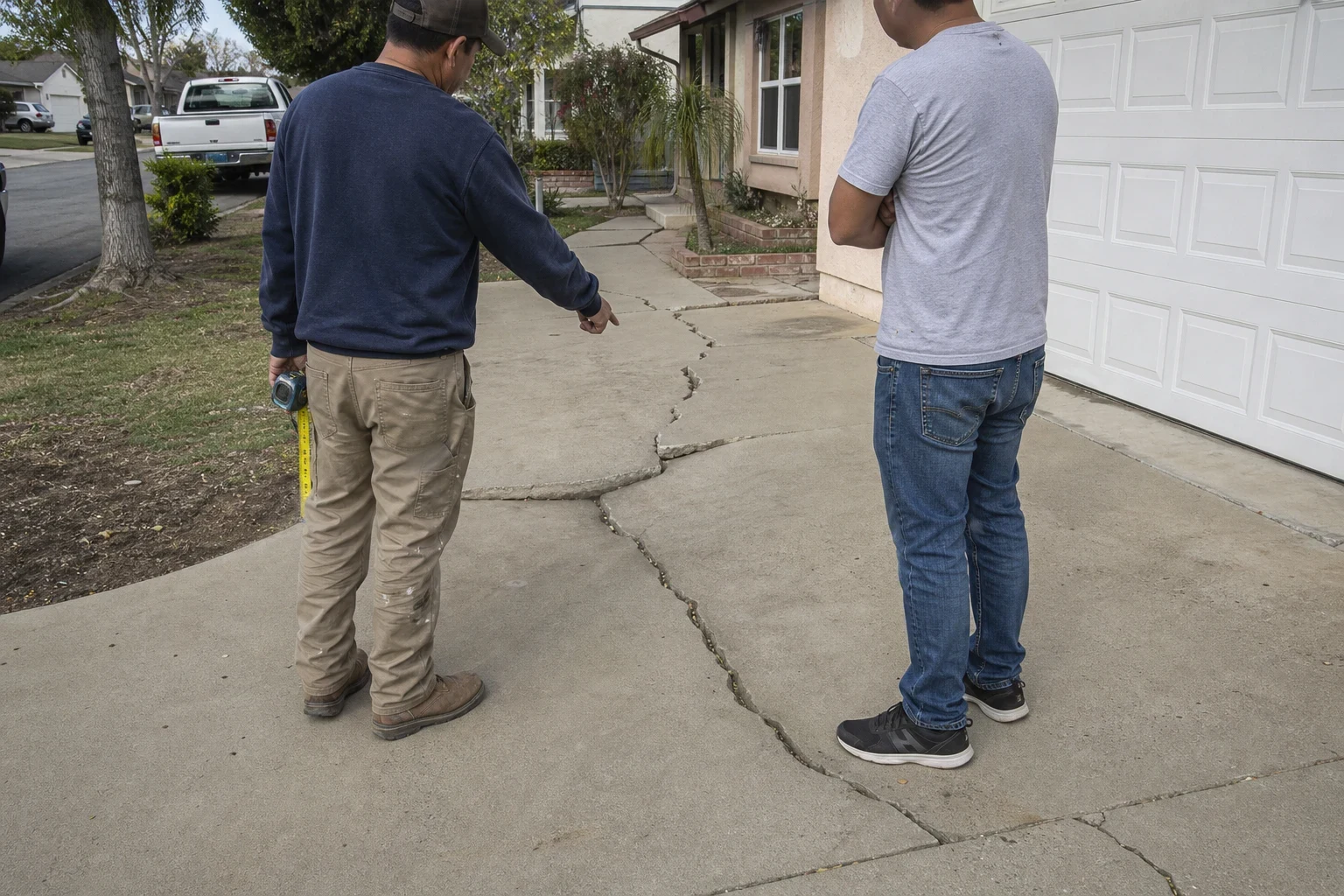
Slab is heaving or sinking
Sections that have lifted or dropped create trip edges and send water the wrong way. When the base underneath has failed, replacing the slab is usually the honest answer.
Concrete sits against the stucco
If the surface is at or above the bottom edge of your walls, moisture can wick up and stain or damage the stucco.
Roots have taken over
A tree that has outgrown its planter can crack and lift concrete across the whole courtyard. We can reshape planters and pour around them.
The space just isn't usable
Dirt, loose gravel or uneven pavers make it hard to set out chairs or a table. A flat, finished slab turns the courtyard into a room you will use.
How a Courtyard Job Runs
- 1
Walkthrough and estimate
Your contact visits, measures and talks through how you want to use the space. You get a written estimate that lists tear-out, drainage, base, finish and cleanup as separate lines.
- 2
Prep day
The crew removes the old surface, grades the soil, sets forms and drains, and places reinforcement. Your contact checks the slope and wall heights before anything else happens.
- 3
Pour day
Since most courtyards are closed in, we usually run a pump line through a side gate so the truck stays at the curb and nothing crosses your house. In hot months we start early so the finishers can work the concrete before the sun gets to it.
- 4
Curing and walkthrough
We cut joints, keep the slab damp as it cures, clean up and walk the finished courtyard with you. You'll know when it's ready for foot traffic and furniture.
What Shapes the Cost of a Courtyard
Courtyards are rarely simple rectangles, and getting concrete into them takes planning. Your estimate reflects the real conditions of your space, and each item is spelled out so you can see where the money goes.
- Access
- A wide side gate makes a pump line easy. Narrow gates, steps or no outside access add labor and equipment time.
- What comes out first
- Removing old concrete, brick or thick pavers takes time and disposal fees. Bare dirt costs less to prepare.
- Drainage needs
- The number of drains and how far the lines run to an exit point affect the total. Courtyards that trap water need more of it.
- Shape and obstacles
- Curves around planters, fountains, columns and tree wells take more forming and hand finishing than straight edges.
- Finish and color
- A broom finish is the simplest. Color, salt finish, exposed aggregate and stamping each add material and labor.
Courtyard Concrete Questions
Do you need to bring concrete through my house?
No. In most courtyards we run a pump hose through a side gate or over a wall, so the truck stays out front and your floors stay untouched. If access is truly blocked, your contact will explain the options during the walkthrough.
Where will the rainwater go?
We slope the slab toward area drains and away from your walls, then run the drain lines to a safe outlet. We test the lines with water before pouring so you aren't finding out during the first storm.
Can you pour around my fountain or a tree?
Yes. We form around fountains, planters and tree wells and leave expansion material where the concrete meets them. If a tree's roots are likely to lift the new slab, we'll tell you plainly and suggest a larger planter or root barrier.
Which finish stays cooler in summer?
Lighter colors and textured finishes like salt or a fine broom stay noticeably cooler underfoot than dark, smooth concrete. Since courtyards often trap afternoon heat, we usually suggest a lighter tone.
When can we use the courtyard again?
Walking across the new slab is generally okay once it has cured for a couple of days. Hold off on heavy tables, pots and planters for roughly a week. Cure time shifts with heat and humidity, so we'll give you dates that match the weather on your pour day.
Who do I talk to if something comes up mid-job?
The same person who gave you the estimate. They schedule the crew, are on the phone with you through prep and pour day, and handle the final walkthrough.
Ready to Use Your Courtyard Again?
Tell us about the space, the drainage trouble and how you'd like to use it. One person will take it from there, from measuring to the last sweep. We also pour patios and walkways if the project reaches past the courtyard walls.