ServicesRV Parking Pads
Concrete RV Parking Pads in Orange
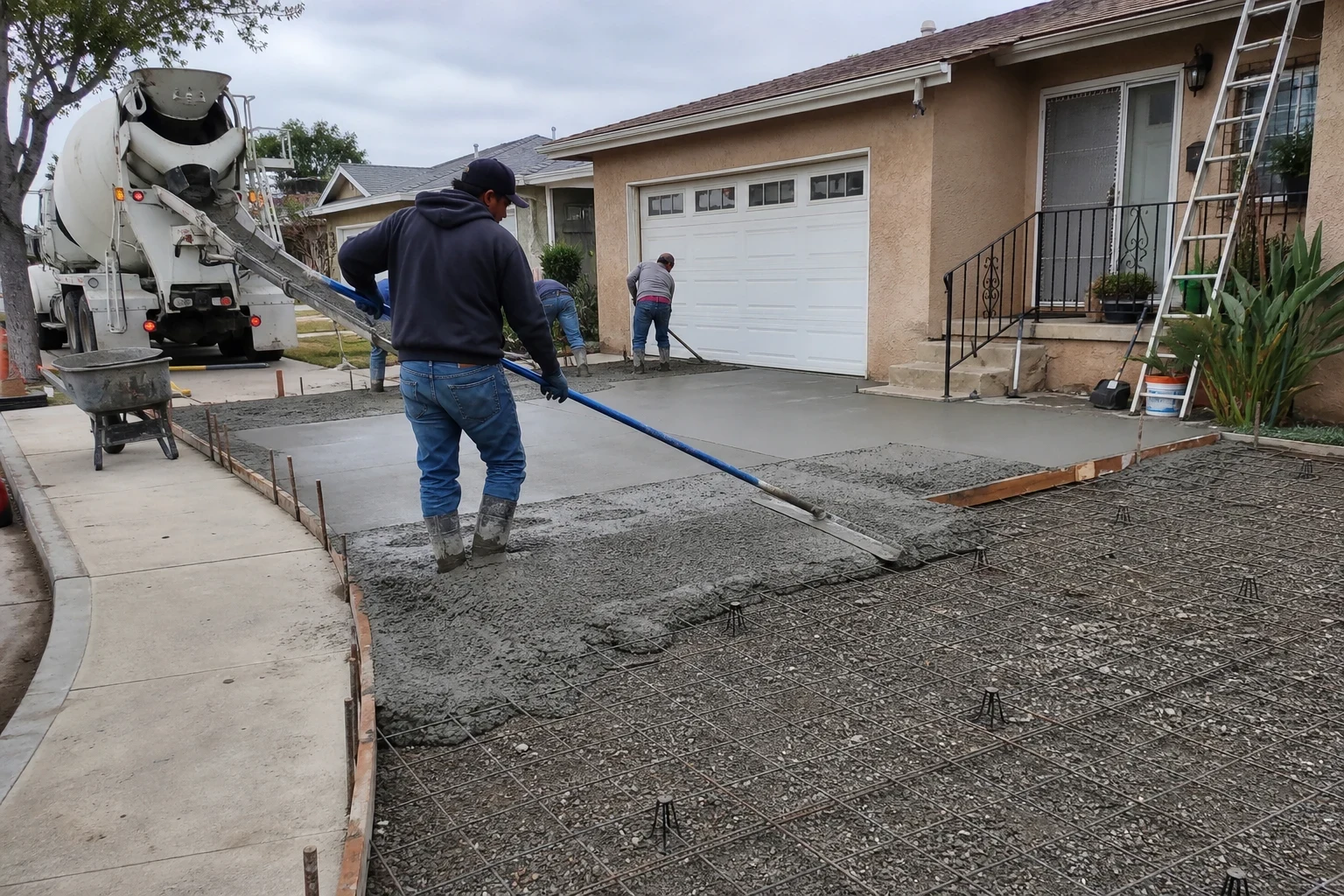
We build RV pads sized to your rig, with a thicker slab, steel reinforcement and a compacted base so the concrete holds up under heavy tires and leveling jacks. One person handles your questions and the schedule from the first visit to the final sweep.
A Parking Spot Made for Real Weight
A motorhome or fifth-wheel puts far more weight on the ground than a car, and it puts that weight on a few small spots: the tires, the tongue jack and the stabilizers. Gravel ruts and shifts under that load. A standard thin walkway slab can crack. An RV pad is designed for the job, with extra thickness, rebar and a firm base underneath.
It is the right call when your rig has been sitting on dirt or rock, when you are tired of paying for storage, or when you want a level, clean spot beside your home where you can load up before a trip. The person who measures your space is the same one who answers your calls and walks the finished pad with you, so nothing gets lost between the estimate and the pour.
What Your RV Pad Includes
- 01
Sizing around your rig
We measure your RV or trailer, then add room for slide-outs, awnings and walking space around it. We also check gate width and turning room so you can actually back it in.
- 02
Excavation and compacted base
We dig out soft soil and roots, then bring in crushed aggregate base and compact it in layers. Much of Orange County sits on clay that swells when wet, so a good base matters as much as the concrete on top.
- 03
Thicker slab with rebar
RV pads are poured thicker than a patio or walkway and reinforced with steel. That extra depth spreads the load from tires and jacks instead of letting it punch into one spot.
- 04
Drainage and slope
The pad gets a gentle fall so rain and wash water run away from your home and toward the street or a drain. Standing water under a parked rig is exactly what we want to avoid.
- 05
Control joints and finish
Concrete shrinks a little as it cures, so we cut control joints at planned spots. If a crack forms, it tends to hide along a joint where you will hardly notice it. A broom finish gives your tires grip when the surface is wet.
- 06
Cleanup
Forms come out, extra soil and debris get hauled off, and the area around the pad is left tidy.
Questions about RV Parking Pads?
Call(714) 410-5411Signs It Is Time for an RV Pad
Ruts in the gravel
Tires sink into rock or dirt, and you are backing into the same grooves every time. Over the months the rig sits lower on one side.
Your rig never sits level
If you need stacks of blocks to level the coach at home, a flat concrete surface makes setup quicker and easier on your jacks.
Mud and weeds under the coach
Bare ground holds moisture against tires and the undercarriage and grows weeds you have to fight around. A slab keeps the area dry and clean.
Storage fees keep adding up
Monthly storage costs never stop. Many homeowners find that a pad at home makes more sense once they add it up.
An old slab is too thin
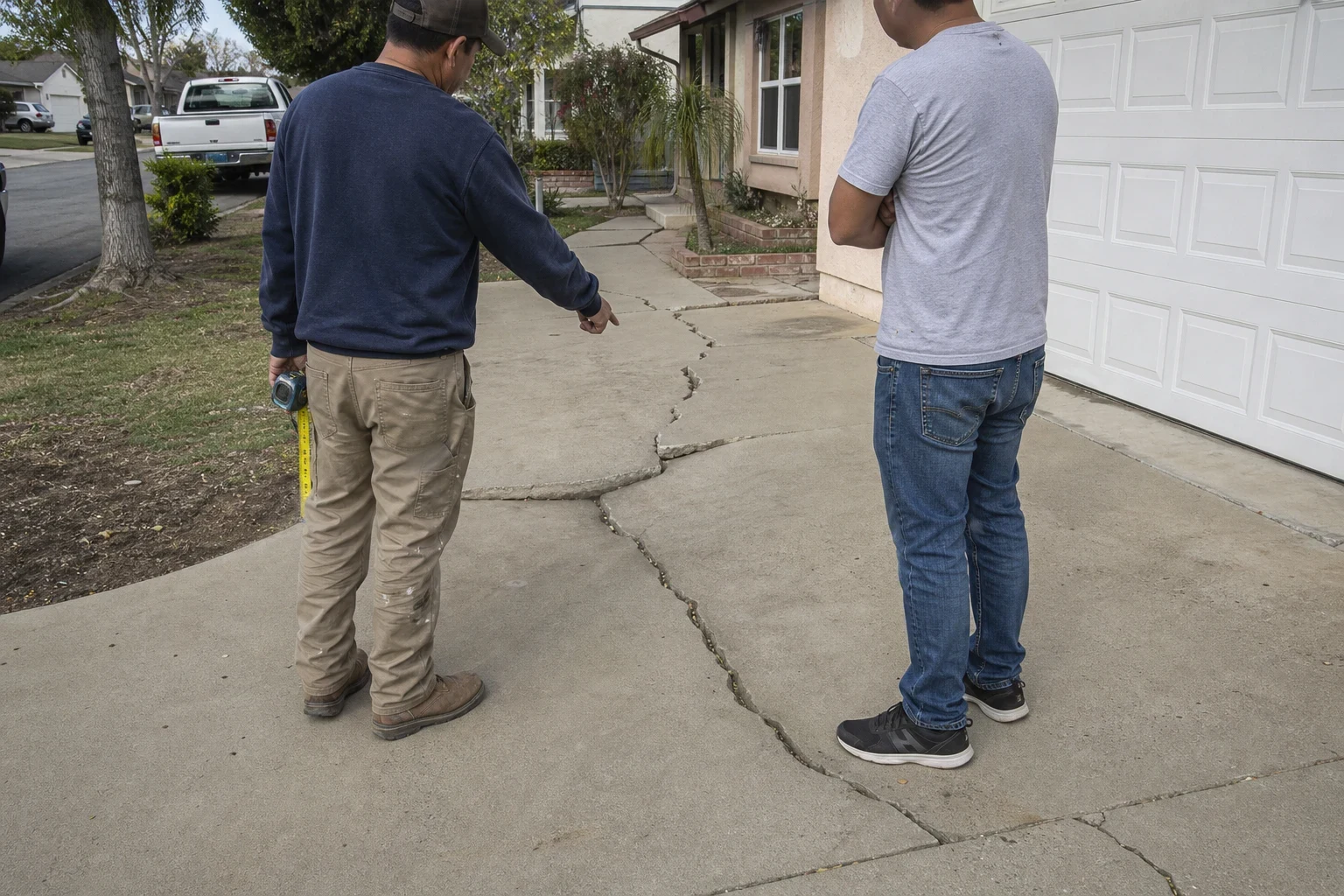
Some side yards were paved with a thin slab meant for trash bins, not a trailer. If that concrete is cracking under your rig, it was not built for the weight and a properly built pad is the better answer.
How the Job Runs
- 1
Walk the site together
We look at the space, your rig, gate access and where the water should go. Afterward you receive a written estimate that breaks out excavation, base, concrete and any permit work separately, and you know exactly who to call with questions.
- 2
Permits and layout
If the work involves a new curb cut or a wider driveway approach, we explain what the city requires and handle the paperwork. Then we mark out the pad and confirm the final size with you before any digging starts.
- 3
Dig, base and forms
The crew excavates, compacts the base, sets forms and places the rebar. This prep usually takes a day or two depending on size and access.
- 4
Pour and finish
Pour day is the busiest day of the job. We place and level the concrete, set the slope, give it a broom finish and cut the control joints.
- 5
Curing and handoff
You can walk on the pad within a day or two and drive a car on it after about a week. We usually suggest waiting a few weeks before parking a loaded motorhome, and we walk the finished pad with you before we call it done.
What Shapes the Price of an RV Pad
Every RV pad is priced from your yard and your rig, not from a chart. The biggest drivers are size, slab thickness and what it takes to get equipment and concrete to the spot. Your written estimate shows each of these so you can see where the money goes.
- Size of the pad
- A pad for a small travel trailer uses far less concrete than one for a long motorhome with slide-outs on both sides.
- Thickness and reinforcement
- Heavier rigs call for a thicker slab and more steel, which adds material and labor.
- Soil and base work
- Soft or clay-heavy soil may need deeper excavation and more base rock. Removing old gravel or a thin existing slab also adds time.
- Access to the site
- If a concrete truck can reach the pad, the pour goes quickly. Narrow side yards may need a pump or wheelbarrows, which changes the cost.
- Permits and approach work
- A new curb cut or widened driveway approach brings city permits and extra concrete at the street.
RV Pad Questions
How thick should an RV pad be?
Most RV pads are poured noticeably thicker than a patio or walkway and reinforced with rebar. The exact thickness depends on the weight of your rig and the soil we find when we dig. We will tell you what we recommend and why before you commit.
How big does my pad need to be?
We start with your rig's length and width, then add room for slide-outs, awnings and space to walk around it. Many people also want extra room to open storage bays or set up a step. We measure your actual RV rather than guessing from a model name.
Can the pad go in my side yard?
Often yes, as long as there is enough width to get the rig through the gate and back it in. We check gate width, turning room and any slope during the first visit. If you also want a paved path along the house, our concrete side yards page covers that work.
Do I need a permit?
A pad on your own property often does not, but a new curb cut or wider driveway approach usually does, and some HOAs have their own rules about RV parking. We look at your situation and explain what applies before the job starts.
How soon can I park my RV on it?
Concrete keeps gaining strength for weeks after the pour. A car is fine after about a week, but we usually suggest waiting a few weeks before parking a heavy motorhome or trailer. Your contact will give you a clear date for your pad.
Can you widen my driveway at the same time?
Yes. If your RV enters from the street, tying the pad into a wider driveway often makes sense and can be poured in the same project. See our driveways page for more on that work.
Ready to Bring Your RV Home?
Tell us about your rig and the space you have in mind. One person will answer your questions, set up a visit and stay with your project until the pad is finished and clean.