ServicesGarage Floors
Concrete Garage Floors in Orange
We tear out worn, sunken or badly cracked garage slabs and pour a new floor that drains toward the door and holds up to daily parking. One person handles your questions, the schedule and the cleanup, so you always know what happens next.
A new garage floor, start to finish
A garage floor carries more than most slabs around your home. It takes the weight of cars every day, along with dripping oil, hot tires, storage shelves and the occasional dropped tool. When the old slab has settled, broken into pieces or started tipping water toward the house, patching rarely holds for long. A new pour is usually the clean answer.
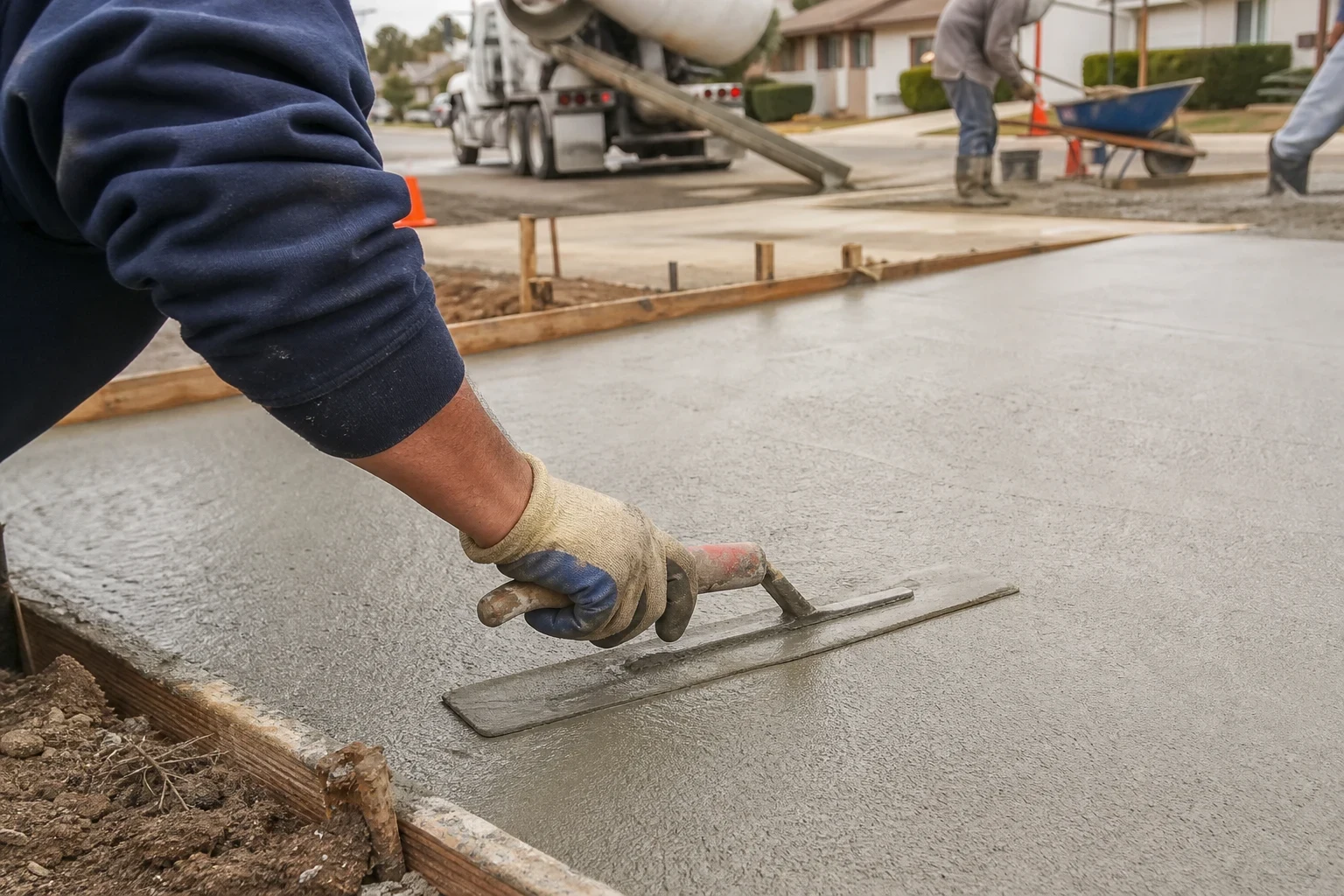
We handle the whole job: breaking out the old concrete, hauling it away, fixing the base underneath, setting reinforcement and pouring a floor finished for the way you use the space. You talk to the same person from the first visit to the final walk-through, so nothing gets lost between the estimate and the crew.
If your driveway is in rough shape too, we can plan both together so the new garage floor meets a new driveway at the same height. Our Driveways page covers that work.
What your garage floor job includes
- Saw-cutting and demolition
- We saw-cut a clean line at the threshold and along any edges we keep, then break out the old slab. That keeps the cut straight and protects the walls and door frame.
- Haul-away of old concrete
- The broken concrete leaves with us. You are not left with a pile of rubble in the driveway.
- Base prep and compaction
- Most cracked garage floors failed from below. We regrade and compact the base so the new slab sits on firm, even ground, and we add a vapor barrier where moisture is a concern.
- Reinforcement and proper slope
- We set rebar or wire mesh at the right height in the slab and form a gentle slope toward the garage door, so washwater and rain blown in under the door run out instead of pooling against the house.
- Finishing and control joints
- You choose a smooth trowel finish that sweeps easily or a light broom finish for more grip. Control joints are cut early so the natural shrinkage cracks land in straight lines instead of wandering across the floor.
- Cleanup and walk-through
- We clear the forms and debris, sweep up and walk the finished floor with you, including how long to wait before you park on it.
Signs it is time for a new garage floor
Cracks that keep growing
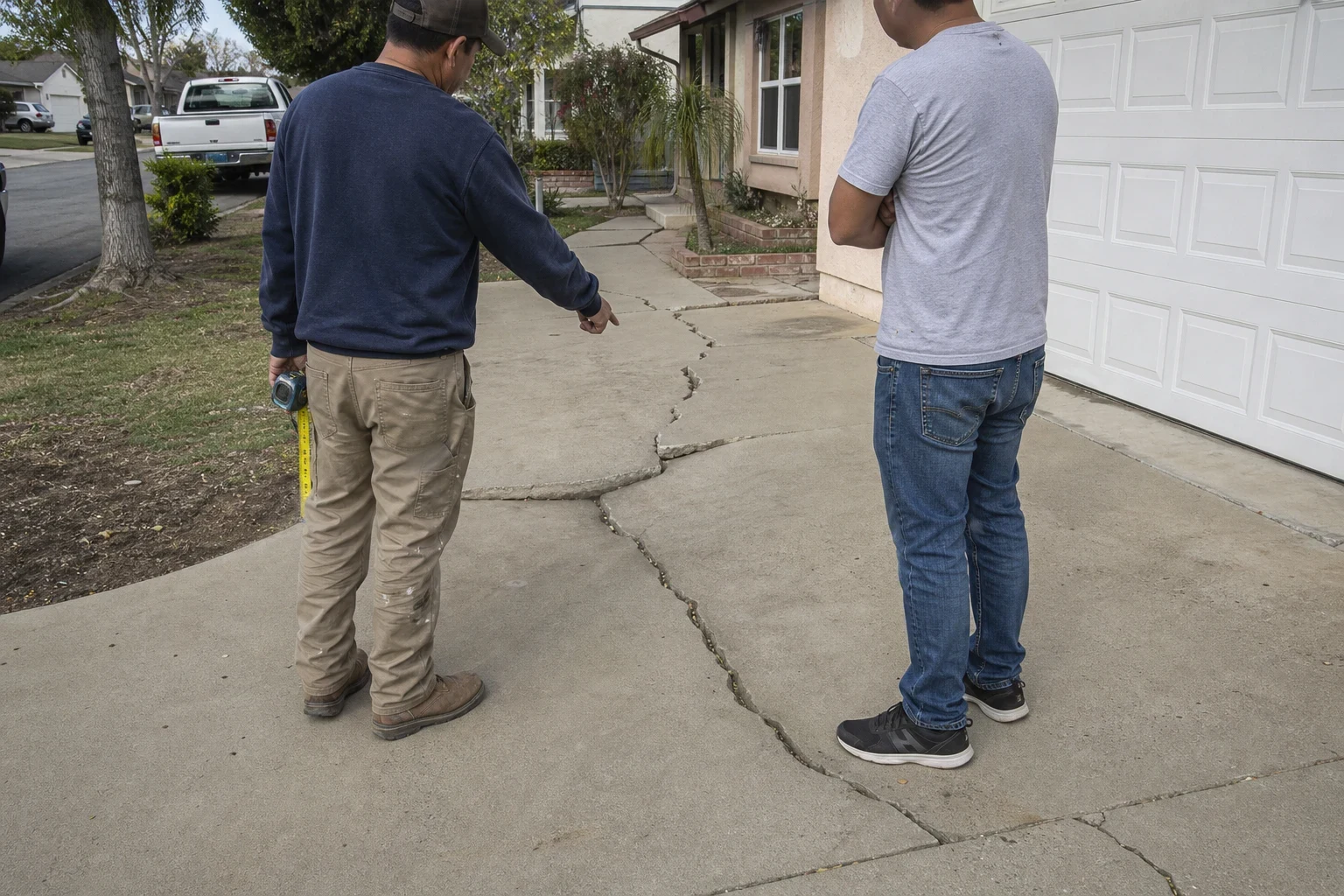
Thin hairline lines are part of how concrete behaves. Wide gaps, or cracks with a raised lip where the two sides no longer line up, tend to point to movement in the base below.
A section has sunk
When part of the floor drops, you catch your foot on the edge and water gathers in the low spot. The soil underneath has settled, and the slab is no longer fully supported.
Water runs toward the house
A floor pitched the wrong way sends water to the back wall or the door into your home. Getting the slope right means pouring new concrete.
Flaking, pitted surface
Years of oil, road grime and wear can leave the top layer crumbling and dusty. Once the surface is breaking apart across the whole floor, a fresh slab is the lasting answer.
You are converting the space
Planning a workshop, a home gym or heavier storage often calls for a flatter, stronger floor than the original builders poured.
How the job runs
- 1
Visit and written estimate
We look at the floor, check the slope and the condition at the door and driveway edges, and listen to how you use the garage. You get a written, line-item estimate and the same person stays your contact from here on.
- 2
Clear-out and demo day
You empty the garage before we arrive, and we can tell you exactly how much room to leave. Then we saw-cut, break out the old slab and haul it away, usually in a single day for a standard garage.
- 3
Base, forms and steel
We grade and compact the base, add the vapor barrier if needed and set reinforcement and forms. If your city requires a permit or inspection for the scope, we let you know and schedule around it.
- 4
Pour and finish
We place the concrete, set the slope, finish the surface and cut control joints. Southern California's mild weather lets us pour most of the year, which makes scheduling easier.
- 5
Cure and handoff
You can usually walk on the floor in a day or two and park a car after about a week. We clean up, walk the floor with you and answer any last questions.
What affects the cost of a garage floor
No two garages are built quite the same way, so your price comes from measuring and looking at your actual floor. The written estimate lists each part of the job on its own line, and we flag anything that could change the number before any work begins.
- Garage size
- A one-car garage needs less concrete, steel and labor than a three-car garage. Square footage moves the price more than anything else.
- Removing the old slab
- Old concrete that is extra thick or packed with steel takes longer to break out and weighs more to haul away.
- What is underneath
- If the soil has washed out or settled, we may need to bring in and compact additional base material. We show you this once the old slab is up, before anything is poured.
- Thickness and reinforcement
- A thicker slab with rebar costs more than a standard slab with mesh. It is worth it if you park heavy trucks, plan a car lift or run workshop equipment.
- Permits and access
- Some jobs call for a city permit and inspection. A narrow driveway or limited street access can also change how the concrete truck gets to the garage.
Garage floor questions
Something not covered here? (714) 410-5411
How long will I be without my garage?
Plan on roughly a week before you park a car inside. Demo and pour usually take a few days total, and you can walk on the new floor after a day or two. Full strength builds over about a month, so we suggest avoiding very heavy loads until then.
Can you pour new concrete over my old garage floor?
Usually not. Pouring over the top raises the floor at the door and the house entry, and any movement in the old slab tends to show through. Removing it and fixing the base gives you a floor that lasts.
Will my new floor crack?
All concrete shrinks as it cures, and fine hairline cracks can appear. We cut control joints so those cracks follow straight lines, and a well-compacted base keeps the slab from settling unevenly.
Can I put an epoxy coating on it later?
Yes. A smooth trowel finish works well under coatings. Most coating installers want the concrete to cure for about a month first, so we will give you the pour date to pass along.
Do I have to empty the whole garage?
The floor area needs to be fully clear, including shelving that sits on the slab. Items mounted on the walls or ceiling can usually stay. We go over this at the estimate so moving day is not a guess.
Who do I talk to while the work is happening?
The same person who gave you the estimate. They set the schedule, keep you posted when the base is ready and the pour is set, and walk the finished floor with you.
Ready for a garage floor you can count on
Tell us what is wrong with your current slab and how you use the space. We will set up a visit, look it over and give you a clear written estimate.