ServicesWalkways and Sidewalks
Walkways and Sidewalks in Orange
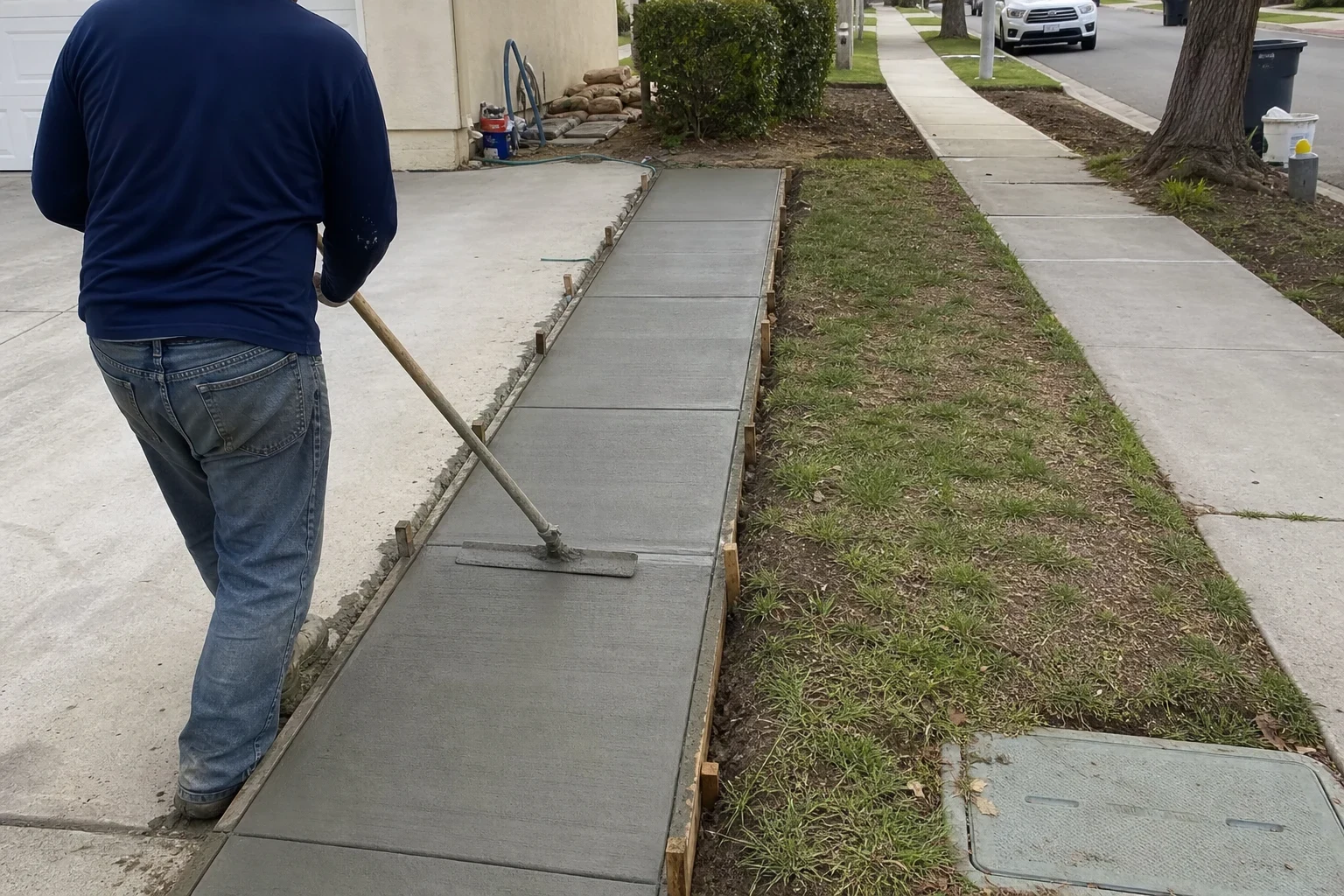
We pour new concrete walkways and sidewalks that sit flat, shed water away from your home and go where your family actually walks. One person handles your questions from the first visit through the final sweep, so you always know who to ask.
A path you stop thinking about
A good walkway is one you never notice. No lip to catch a toe, no puddle by the front door, no dirt track worn across the lawn where the old path should have gone. That is what we build: a new concrete path from the street, driveway or side gate to wherever you need to get.
Most walkways we pour are about 4 inches thick over a compacted gravel base, with a gentle slope so rain runs off instead of toward your foundation. Orange County's clay soil swells when it gets wet and shrinks when it dries, so the base and the joint layout matter as much as the concrete itself.
The same person who walks your property with you is the one who schedules the crew, answers your calls and checks the finished work. You won't be passed between an estimator, a scheduler and a foreman.
What your walkway project includes
Layout that fits how you move
Before any digging, we mark the route on the ground so you can walk it and change the width or curve. Most front walks feel comfortable at four feet; going wider helps with strollers, wheelchairs or two people walking together.
Removal of the old path
Any existing walkway or broken stepping stones get broken up and hauled off your property.
Excavation and compacted base
We dig to the proper depth, handle roots that are in the way and compact a gravel base so the whole slab is evenly supported.
Forms, slope and reinforcement
We set the forms so water drains away from your home. Where the soil or the shape of the path needs reinforcement, we add it and tell you the reason.
Finish and control joints
A broom finish keeps the surface grippy in the rain. We cut control joints at even intervals, giving the concrete a planned spot to crack rather than a random one. If you want color or a pattern, we can talk about stamped concrete for the walkway.
Tidy finish to the job
Once the concrete has set, we pull the forms, fill soil back along the edges, then sweep and hose down the area so it's ready to use.
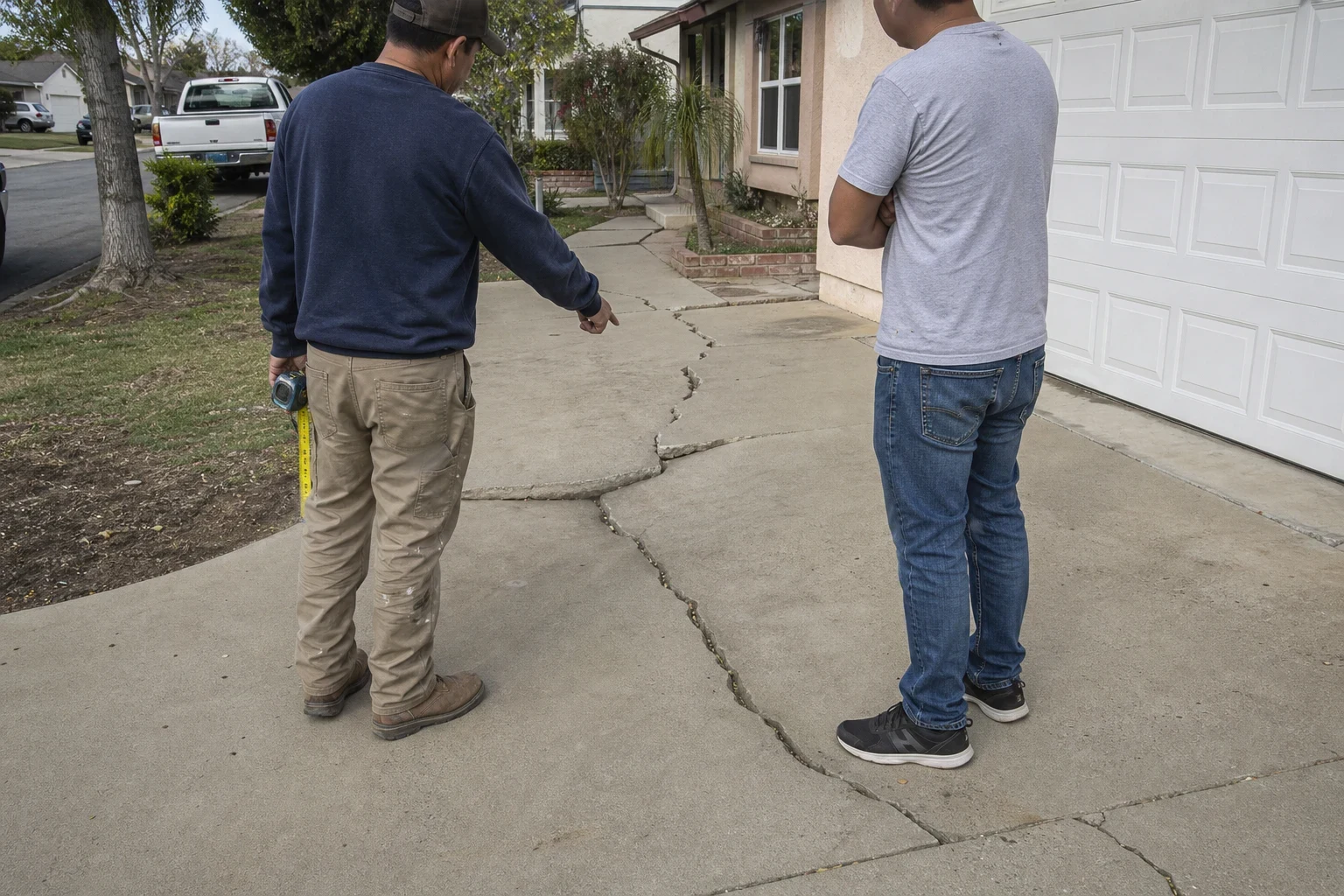
Signs it's time for a new walkway
- Raised edges that trip people
- When one slab sits higher than the next, guests and kids catch their feet on it. A new path with a proper base puts every section back on one level.
- Water pooling near the house
- A walkway that slopes toward your foundation sends every rain straight to the wrong place. Replacing it lets us set the pitch correctly.
- Roots lifting the concrete
- Tree roots under an old path will keep pushing it up. We can reroute the walkway, leave more room around the tree or plan the new slab with the roots in mind.
- A worn dirt trail in the lawn
- If everyone cuts across the grass instead of using the path, the path is in the wrong spot. A new walkway can follow the route people already take.
- Crumbling or sinking stepping stones
- Pavers and stepping stones that wobble or sink get harder to walk on every year. A continuous concrete path is steadier underfoot.
How your walkway gets built
- 1
A phone call to start
Let us know where the path should go and what bugs you about the one you have. Then we'll pick a time to come take a look.
- 2
Site visit and written estimate
We take measurements, check the slope, look for roots and sprinkler lines and go over finish options. Your estimate comes in writing with every piece of the work broken out, and if the path runs into the public strip by the street, we let you know whether the city requires a permit.
- 3
Prep day
The crew breaks out the old concrete, digs, compacts the base and sets the forms. We flag any sprinkler heads in the way so nothing catches you off guard.
- 4
Pour and finish
In one visit the concrete is placed, leveled, edged, broom finished and jointed. A typical walkway is poured in a single day.
- 5
Curing and final walk-through
After the concrete sets, the forms come off and we backfill and tidy up. Your contact walks the new path with you and explains how to care for it over the first few weeks.
What affects the cost of a walkway
Every walkway is priced from its own measurements and site conditions, so we don't quote numbers before we've seen it. Your written estimate shows where the money goes. These are the things that move it most.
- Length, width and shape
- More square footage means more concrete and labor. Curves and angled corners take more forming time than a straight run.
- Tear-out and haul-away
- Removing an old slab adds labor and disposal. Thicker or reinforced old concrete takes longer to break out.
- Access to the site
- If the truck can reach the pour, it goes faster. A path behind the house reached only through a narrow side gate means wheelbarrows or a pump.
- Roots, grading and soil
- Large roots, uneven ground or soft soil add digging and base work before the pour.
- Finish and permits
- A broom finish is the simplest. Stamped patterns or color add material and time, and work in the public sidewalk area may require a city permit.
Common questions about new walkways
- When is it safe to step on fresh concrete?
- Once the surface has firmed up, usually after a day or two, light foot traffic is fine. Concrete keeps getting stronger for weeks after the pour, so keep heavy loads like a full wheelbarrow off it for a while. On pour day we'll give you timing that fits your slab and the weather.
- Do I need a permit for the sidewalk at the street?
- A path that stays inside your property line usually doesn't need one. The sidewalk along the street often sits in the public right-of-way, and the city typically requires a permit for work there. We look into this during the estimate and tell you plainly what applies to your home.
- Can the new walkway tie into our driveway or front steps?
- Yes. We set the heights so the surfaces meet evenly and water has nowhere to collect at the joint. If you're also considering new driveways or concrete steps and stairs, planning them at the same time usually makes the whole job simpler.
- Will tree roots crack the new concrete?
- Over time, roots can lift any slab. We trim back what can be cut safely, leave room around the trunk and can move the route if a tree sits right in the path. You'll get an honest read on the risk for your particular tree.
- What happens to my sprinklers and lawn edges?
- During the visit we look for sprinkler lines and flag the heads near the work area. The grass right next to the forms will get disturbed, so once the forms are pulled we fill the edges with soil and the lawn can grow back up to the concrete.
Ready for a walkway that feels solid underfoot
Tell us where you want to walk and what's wrong with the path you have now. The person you talk to stays with your project until the last of the cleanup.