ServicesDriveways
Concrete Driveways in Orange, CA
We replace cracked, sunken and tired driveways with new concrete poured on a solid base and sloped to shed water. One person measures, quotes, schedules and checks in with you, so you always know what's happening and who to ask.
A new driveway, built from the ground up
Your driveway takes more abuse than any other concrete around your home. It carries cars every day, bakes in the sun and catches whatever runs off the roof and lawn. When the slab is broken through, sinking or lifting at the joints, a new driveway is usually the cleaner answer than chasing problems one at a time.
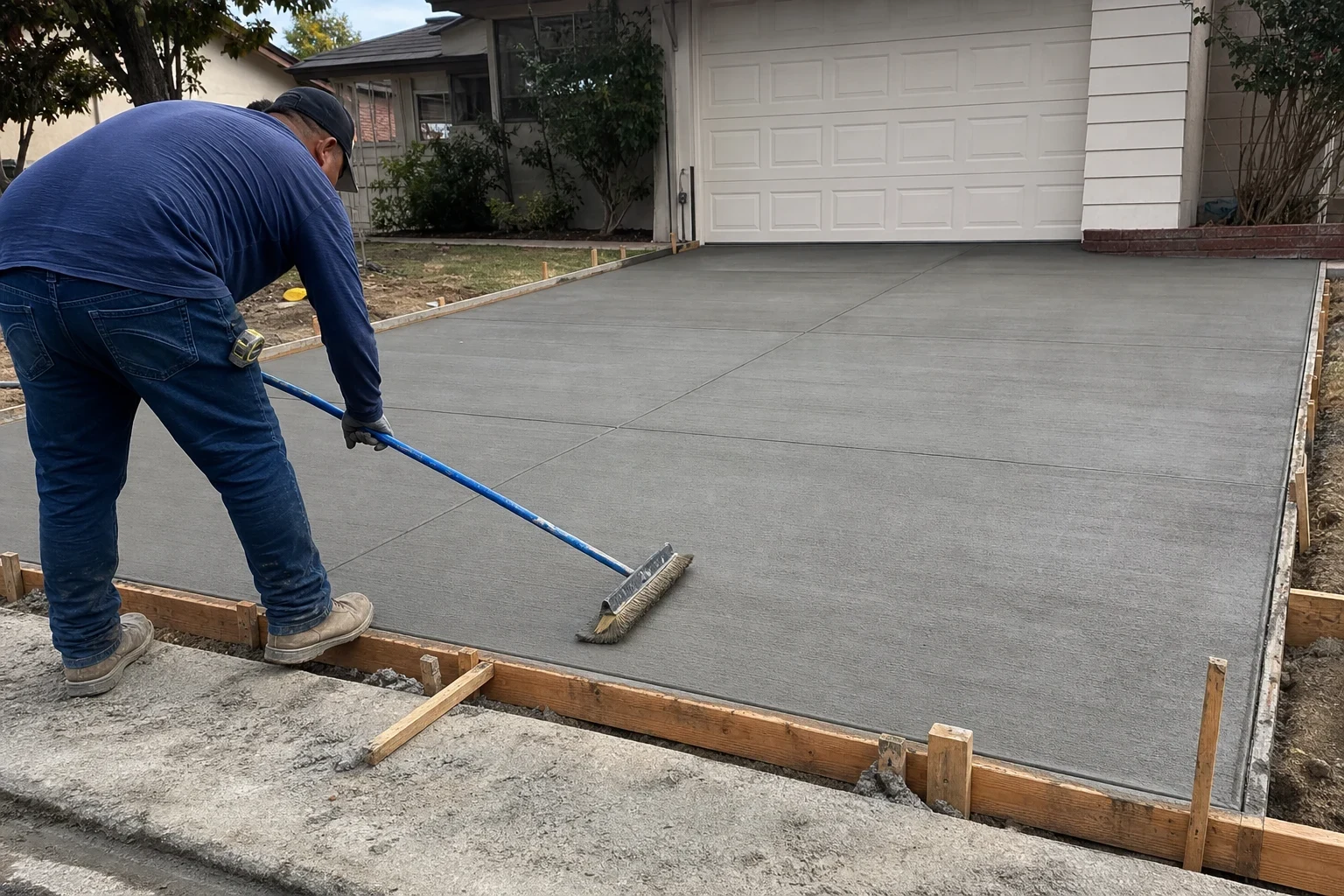
We remove the old concrete, rebuild what's underneath, set the forms and pour a driveway sized and sloped for the way you actually use it. A plain broom finish, exposed aggregate, colored concrete or a stamped border are all on the table, and we'll explain how each one wears before you choose.
The same person who walks your driveway with you handles the estimate, the schedule and your questions until the last of the forms are pulled. You won't have to repeat yourself to a new face each day.
What your driveway project includes
Tear-out and haul-away
We break up the old driveway, load the pieces and haul them away the same day. You won't be stepping around a pile of broken concrete for a week.
Base grading and compaction
Most driveway failures begin below the surface. We grade the soil, bring in base rock and compact it in lifts so the new slab rests on firm, even ground. Much of Orange County has clay that swells when it's wet and shrinks as it dries, and a well-built base is the best answer to that movement.
Steel reinforcement
We raise the rebar or wire on small blocks before the pour, so the steel sits within the thickness of the slab and carries load. Steel left flat on the dirt does very little.
Slope and drainage
We pitch the driveway away from your garage and foundation and toward the street or a drain. Water that sits on concrete or runs back toward the house causes problems you don't want.
Control joints and finish
Every slab will crack somewhere eventually, and joints choose the spot. We cut them at the proper spacing, then give the surface a broom texture for traction or the decorative finish you selected.
Street apron and permit
If your project includes the section at the curb, that part usually falls under city rules. We pull the permit and schedule the inspection so you don't have to.
Signs it's time for a new driveway
- Cracks that keep growing
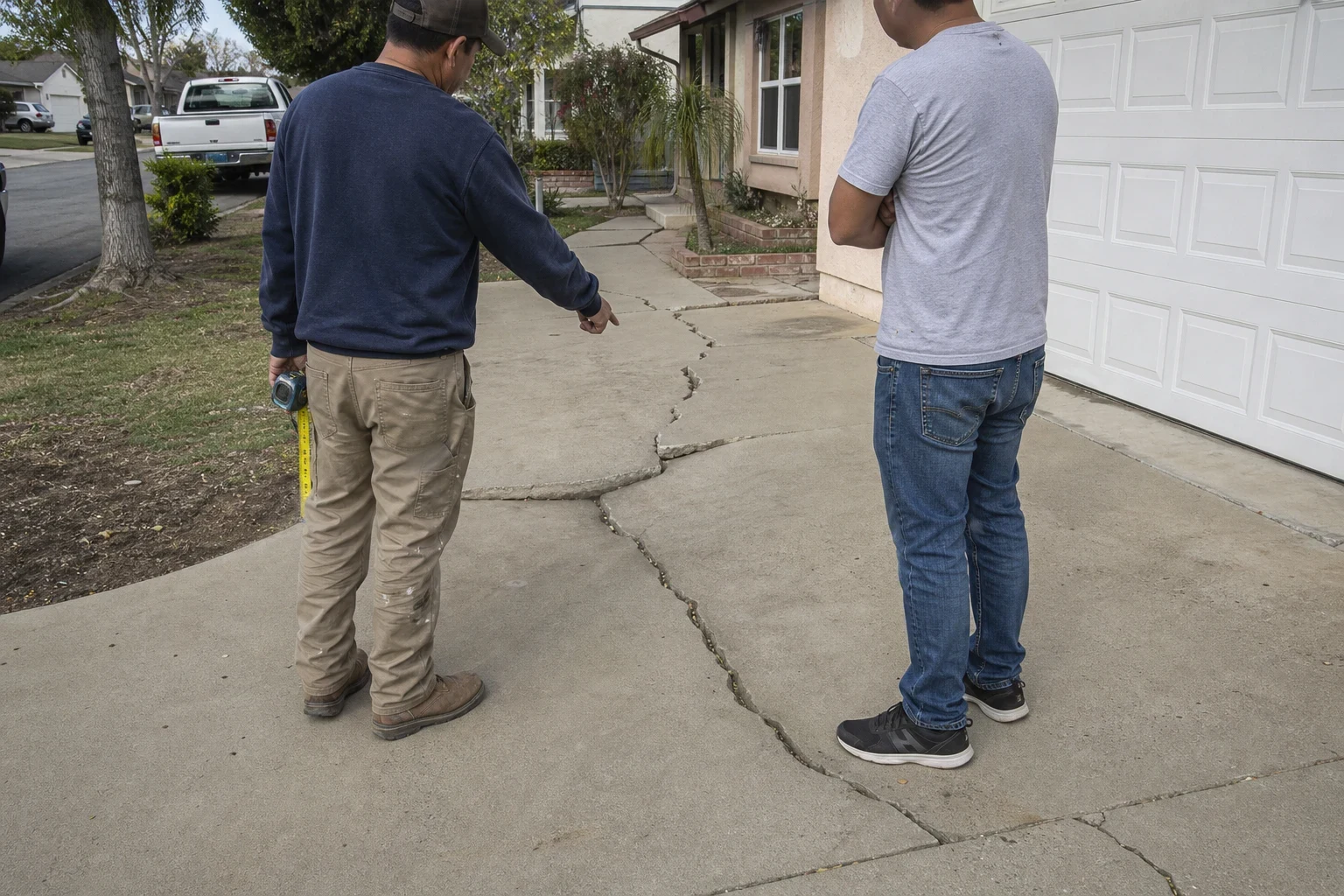
- Thin surface lines come with concrete and aren't a worry on their own. When a crack is wide enough to catch a car key, or it opens a little more each year, the ground below has usually stopped supporting the slab.
- Slabs at different heights
- When one section drops or rises above the next, you get a trip edge and a jolt every time you pull in. That's the soil shifting, and the lasting fix is a fresh start on a better base.
- Water that pools or runs toward the garage
- Puddles that linger after rain or sprinklers, or runoff heading toward the house, point to a slope that was wrong from day one or has settled since.
- Roots lifting the concrete
- Mature trees near the driveway can push slabs up from below. A new pour lets us plan around the roots instead of fighting them.
- It no longer fits your life
- Maybe the driveway is too narrow for two cars or you want room for a work truck. Widening or reshaping is easiest when the whole driveway is being replaced.
How your driveway job goes
- 1
A phone call, then a visit
You tell us what's going on and we set a time to see the driveway in person. We measure, look at drainage and access, and talk about the finish you have in mind.
- 2
A written, line-item estimate
You get an estimate that spells out demo, base work, concrete, finish and any permit. If something about the job could change the price, we tell you up front.
- 3
Demo and prep day
The crew tears out the old slab, grades and compacts the base, then sets forms and steel. We protect your lawn, planters and walls along the edges.
- 4
Pour and finish
Concrete arrives, gets placed and is finished while it's workable. Joints go in the same day, and we mist or cover the slab if the weather is hot and dry.
- 5
Curing and cleanup
We pull the forms, backfill the edges and clean up. Your contact tells you when it's safe to walk on and when it's ready for cars.
What affects the cost of a driveway
Every driveway is priced from its own measurements and conditions, which is why we look at it in person before quoting. These are the things that move the number most. Your estimate will show each one so nothing comes as a surprise later.
- Size and thickness
- Square footage drives the amount of concrete, steel and labor. A driveway that will carry an RV or a heavy truck may need a thicker slab.
- Tear-out and access
- Thick old concrete, multiple layers or tight access for equipment all add time to demolition and hauling.
- Soil and base condition
- Soft spots, poor drainage or expansive clay can mean extra excavation and more base rock. We point this out during the visit, not halfway through the job.
- Finish choice
- A broom finish is the most straightforward. Color, exposed aggregate or stamped borders add material and finishing time.
- Permit and street apron
- Work at the curb typically needs a city permit and inspection, which adds a line to the estimate.
Driveway questions we hear often
- How soon can I park on my new driveway?
- Foot traffic is usually fine after about a day. Cars generally need to stay off for roughly a week, and heavier vehicles a bit longer than that. Your contact will give you real dates for your job, based on the weather and the mix we poured.
- Does someone have to stay home while you work?
- No, you don't need to be there all day. It's useful to have someone around when the crew arrives on demo day and again on pour day, in case a quick decision comes up. The rest of the time we'll update you by phone.
- Can you make my driveway wider?
- Often, yes. Replacement is the best time to widen or reshape it. We check setbacks, the curb cut and drainage first, and if the change needs city approval we handle the permit.
- Will my new driveway crack?
- Concrete shrinks a little as it cures, so some fine lines are expected. What we can do is manage them: a firm base, steel placed where it does its job and joints spaced correctly, so any cracking stays narrow and follows the lines we planned.
- Who do I talk to if I have a question mid-project?
- The same person who gave you your estimate. They know your driveway, your schedule and what was agreed, so you get a straight answer without being passed around.
Let's talk about your driveway
Tell us what's bothering you about the one you have and what you'd like instead. We'll set up a visit and you'll have one person to call from there on.