ServicesStamped Concrete
Stamped Concrete in Orange
Stamped concrete gives you the look of slate, flagstone or wood plank with the strength of a poured slab. We help you pick the pattern and color, then one person keeps you updated from the first visit through the final sealer coat.
How stamped concrete works and where it fits
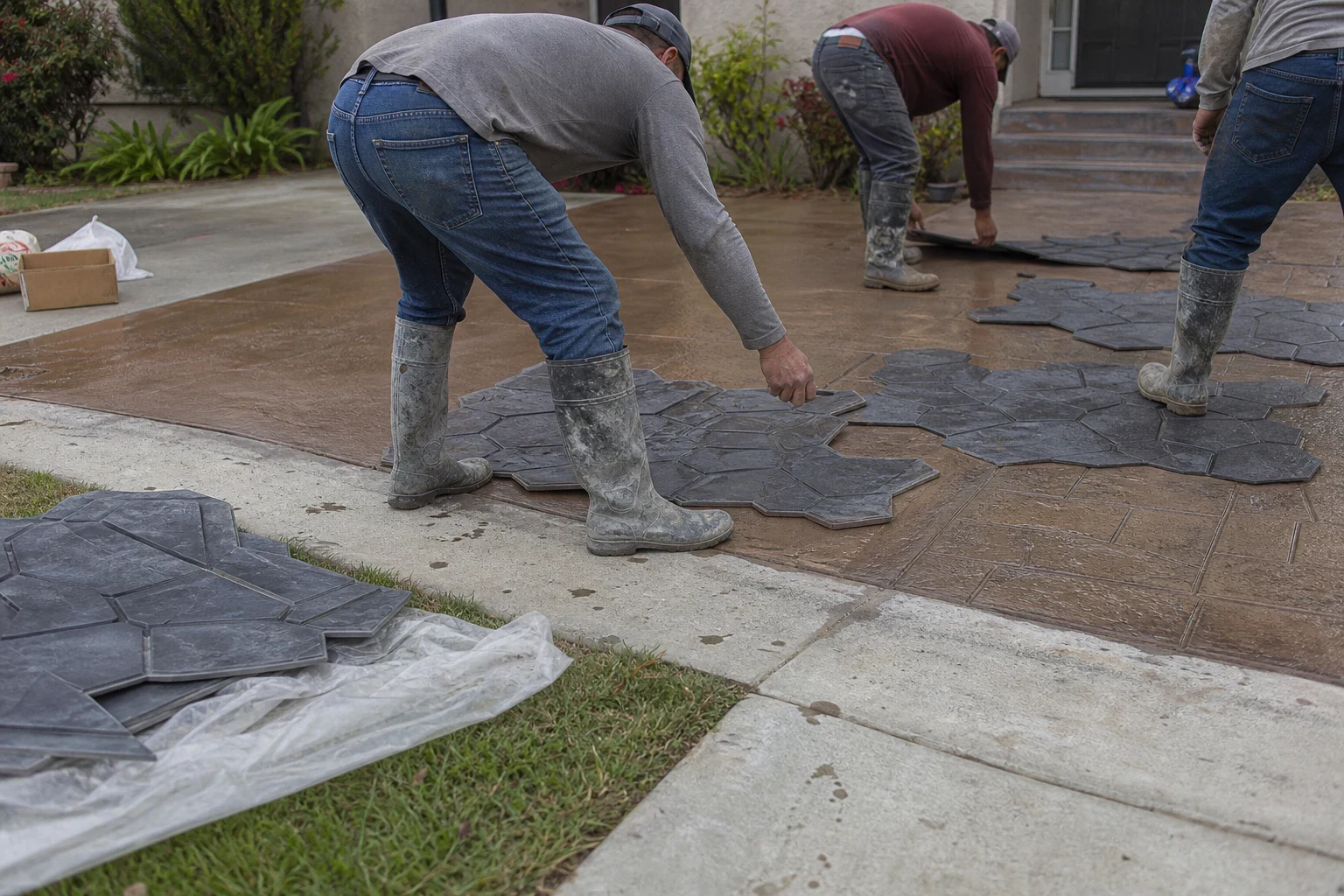
We start with a standard poured slab, then press textured mats into it while it is still workable. Color is added to the mix or worked into the surface, and a release agent leaves the darker tones you see in the grout lines of natural stone. You end up with one solid surface, with no loose pavers to drift and no gaps for weeds to fill.
It suits patios, walkways, pool surrounds, courtyards and driveways where plain gray feels too flat. It makes sense when you want a decorative look and do not mind resealing every few years. If a clean, practical surface is all you need, a broom finish from our Patios or Driveways pages may serve you better, and we will say so.
From start to finish, you have one person to talk to. That contact helps with pattern questions, sets the pour date and looks over the completed surface with you.
What your stamped concrete project includes
- Design walk-through
- We look at the area with you, measure it and show you pattern and color samples. We talk about how the pattern lines up with your doors, steps and house walls so the layout looks intentional.
- Removal and base preparation
- Old concrete, turf or soil comes out and we compact a gravel base. Stamped concrete shows every settlement, so the base gets the same care as the finish.
- Forms, steel and grading
- We set forms to slope water away from your home and place rebar or wire as the job calls for. Drainage gets planned before any concrete arrives.
- Color and stamping
- Color is mixed in or broadcast as a hardener, then the crew stamps the surface during the short window when the concrete holds a crisp impression. Edges and corners are detailed by hand with smaller tools.
- Control joints and sealing
- Joints are cut to follow the pattern lines where possible so they blend in. After curing, we wash off the release agent and apply a sealer that brings out the color.
- Cleanup
- Forms, leftover material and debris leave with us. We walk the finished surface with you before we call the job done.
Signs stamped concrete could be right for you
Your patio feels plain
A flat gray slab does the job but does not match the rest of your yard. Pattern and color can make the same space feel like part of the house.
Pavers keep shifting
Loose pavers sink, rock underfoot and sprout weeds in the joints. A stamped slab gives you a similar look as one solid surface.
The old concrete is past saving
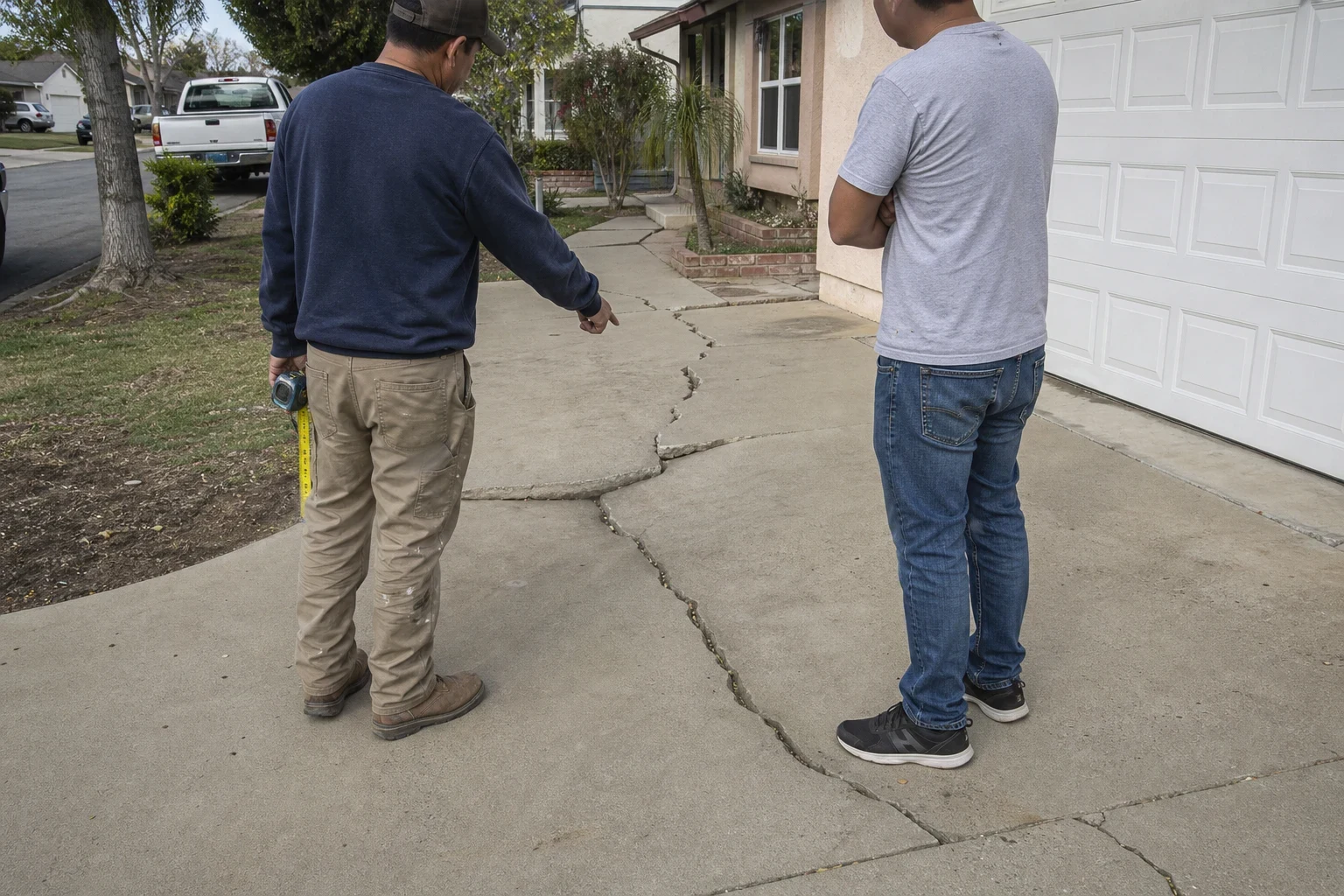
If your existing slab is badly cracked, heaved or sunken, replacing it is a chance to choose a decorative finish instead of pouring plain gray again.
You want things to tie together
A stamped walkway that matches your patio or pool deck connects separate areas of your yard. We can carry one pattern across several spaces.
Natural stone is out of budget
Real flagstone or slate takes more labor to set. Stamping gets you a similar texture without each piece being laid by hand.
How a stamped concrete job runs
- 1
Estimate and design choices
Your contact visits, measures and goes over patterns, colors and sealer options with you. You get a written estimate with each part of the work listed.
- 2
Prep day
The crew removes the old surface, grades, compacts the base and sets forms and steel. Your contact confirms the pour date once prep is checked.
- 3
Pour and stamp day
Concrete is placed, leveled and colored, then stamped as soon as it is ready. On warm, dry days the crew works quickly because concrete stiffens fast in the sun, so we often start early in the morning.
- 4
Cure, wash and seal
The slab cures for several days before we rinse off the release agent and apply sealer. We let you know when it is safe to walk on it and when it can handle vehicles or furniture.
What affects the cost of stamped concrete
Stamped concrete runs higher than a plain finish because it adds color, stamping labor and a sealer coat. Your final number comes down to your space and the choices you make. We break the written estimate into separate lines, so every part of the price is clear to you before work begins.
- Size and shape
- Bigger areas spread the setup work across more square feet. Curves, tight corners and lots of edges need more detailing by hand.
- Pattern and color
- Some patterns call for more mats and more careful lining up. A two-tone look with a release agent adds a step over a single color.
- What is there now
- Tearing out an old slab or replacing poor soil adds labor and hauling. A clear, level area takes less prep.
- Access to the yard
- A narrow side gate can mean pumping the concrete or moving it in by wheelbarrow. Open access from the driveway keeps the pour simpler.
- Sealer choice
- A slip-resistant additive around a pool or a higher-gloss finish changes what the sealing costs.
Stamped concrete questions
Something not covered here? (714) 410-5411
Is stamped concrete slippery?
Sealer can make the surface slicker when wet, especially with a glossy finish. We can add a fine grit to the sealer for pool decks, steps and walkways. A textured pattern also helps with footing.
How often does it need to be resealed?
Most stamped surfaces look best when resealed every few years. Strong sun fades the sealer faster than shade does. When the color starts to look dull or water stops beading, it is time.
Will stamped concrete crack?
All concrete can crack, which is why we cut control joints and prepare the base carefully. We place joints along pattern lines so any cracking stays where it is least noticeable.
Can you match stamped concrete to my existing patio?
We can often get close with the same pattern family and a similar color. New concrete and aged concrete rarely match exactly, so we will show you samples and be honest about how close it will look.
How soon can I use it?
Light foot traffic is usually fine after a day or two. Patio furniture should wait about a week, and driveways need longer before cars park on them. Your contact will give you exact dates for your job.
Ready to choose a pattern?
Tell us about the space and the look you have in mind. One person will walk you through options, schedule the work and stay your contact until the sealer is dry.