ServicesConcrete Side Yards
Concrete Side Yards in Orange
That narrow strip between your home and the fence gets walked every day and ignored the rest of the time. We pour side yards that drain away from your walls, give bins and wheelbarrows a smooth path, and stay easy to hose off.
A side yard that works as hard as you do
Most side yards start as dirt, gravel or a few loose pavers. Over time the gravel scatters, weeds push through, and rainwater pools against the stucco instead of running off. A concrete side yard fixes all of that with one slab that is sloped, jointed and finished for foot traffic.
Side yards are tight spaces with a lot going on: AC condensers, gas and water meters, hose bibs, downspouts and gates. Getting the slope, height and edges right around each of those is what separates a slab that lasts from one that sends water toward your foundation.
From the first visit to the final sweep, you deal with one person. That person measures the space, answers your questions, schedules the crew and checks the finished work with you, so nothing gets lost between the estimate and the pour.
What the work includes
Measuring and drainage planning
We measure the run, check where water goes today and plan a slope that carries it toward the street, an area drain or the yard. We also note every meter, vent and downspout the slab needs to work around.
Clearing and grading
We remove gravel, old pavers, roots and loose soil, then grade the strip to the right depth. Weeds and debris come out now so they are not trapped under the new concrete.
Compacted base and reinforcement
A compacted gravel base goes down first, followed by rebar or wire mesh. Clay soil is common in Orange County and it swells when wet, so a solid base helps the slab ride out the seasons.
Clearance at the stucco line
We keep the finished surface below the weep screed at the bottom of your stucco walls. That gap lets moisture escape from the wall instead of being sealed in behind concrete.
Joints, finish and drains
Narrow slabs need control joints placed closer together so cracking follows straight lines you planned for. We finish with a broom texture for grip and can set area drains or downspout connections in the pour.
Cleanup
Forms, leftover material and washout are hauled away. Your side yard is swept and the gate is left working.
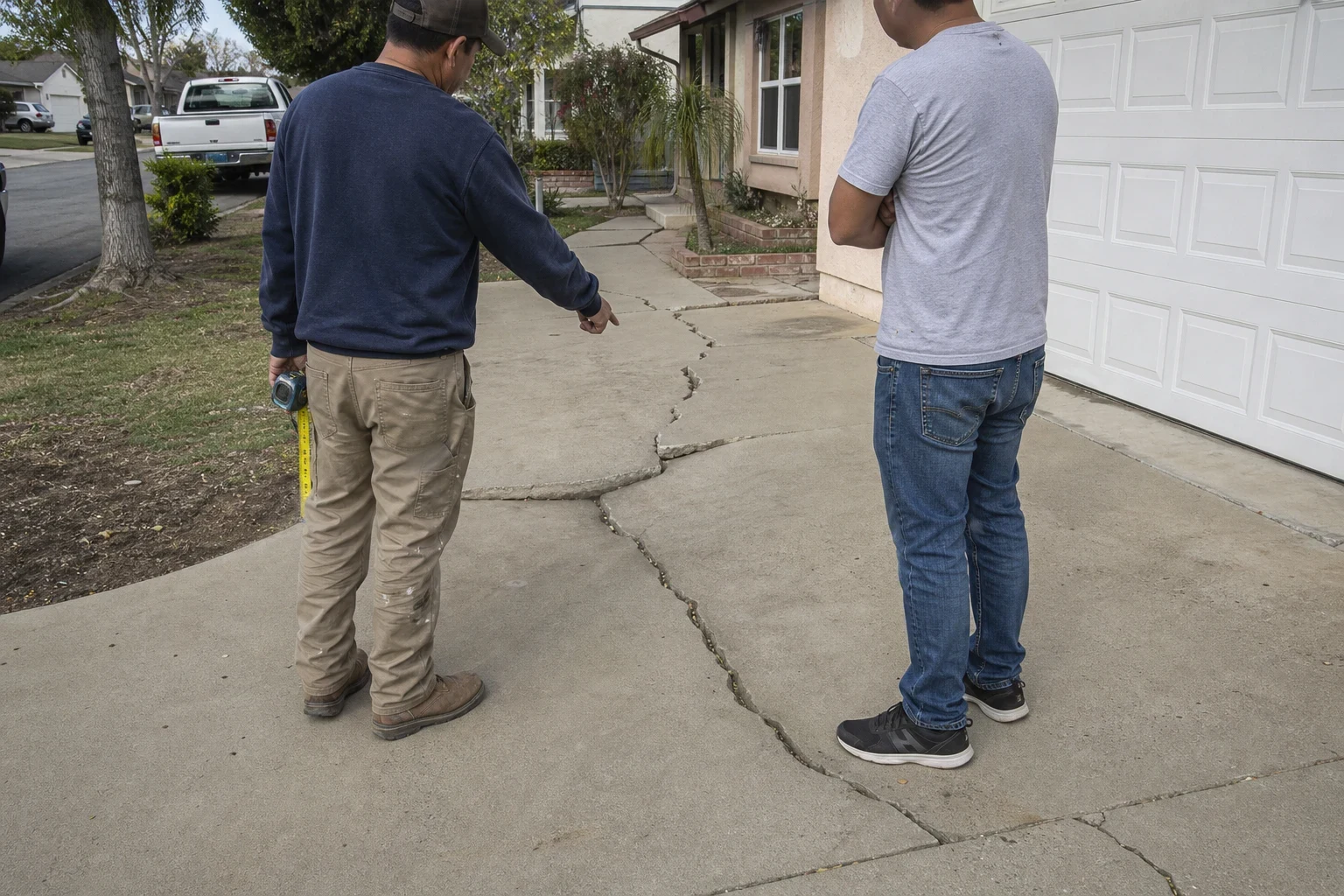
Signs your side yard is ready for concrete
- Water sits against the house
- If puddles linger along the wall after rain, the ground is sloped the wrong way. A properly pitched slab moves that water off and away.
- Gravel ends up everywhere
- Loose rock gets kicked onto the lawn, tracked inside and dragged by bin wheels. Concrete stays put.
- Weeds keep winning
- Pulling or spraying the same strip every few weeks gets old. A slab ends the cycle.
- Bins are a struggle
- Rolling trash cans over dirt, ruts or uneven pavers each week is harder than it should be. A smooth path makes the trip simple.
- You want a usable space
- Some side yards are wide enough for a dog run, a potting bench or storage. Concrete gives you a clean, level base for it.
How your side yard project runs
- 1
Site visit and estimate
Your contact walks the side yard with you, measures it and talks through slope, drains and finish. You get a written estimate with each part of the work listed.
- 2
Prep day
The crew clears the strip, grades it, compacts the base, sets forms and places reinforcement. We protect walls, meters and AC units before any concrete arrives.
- 3
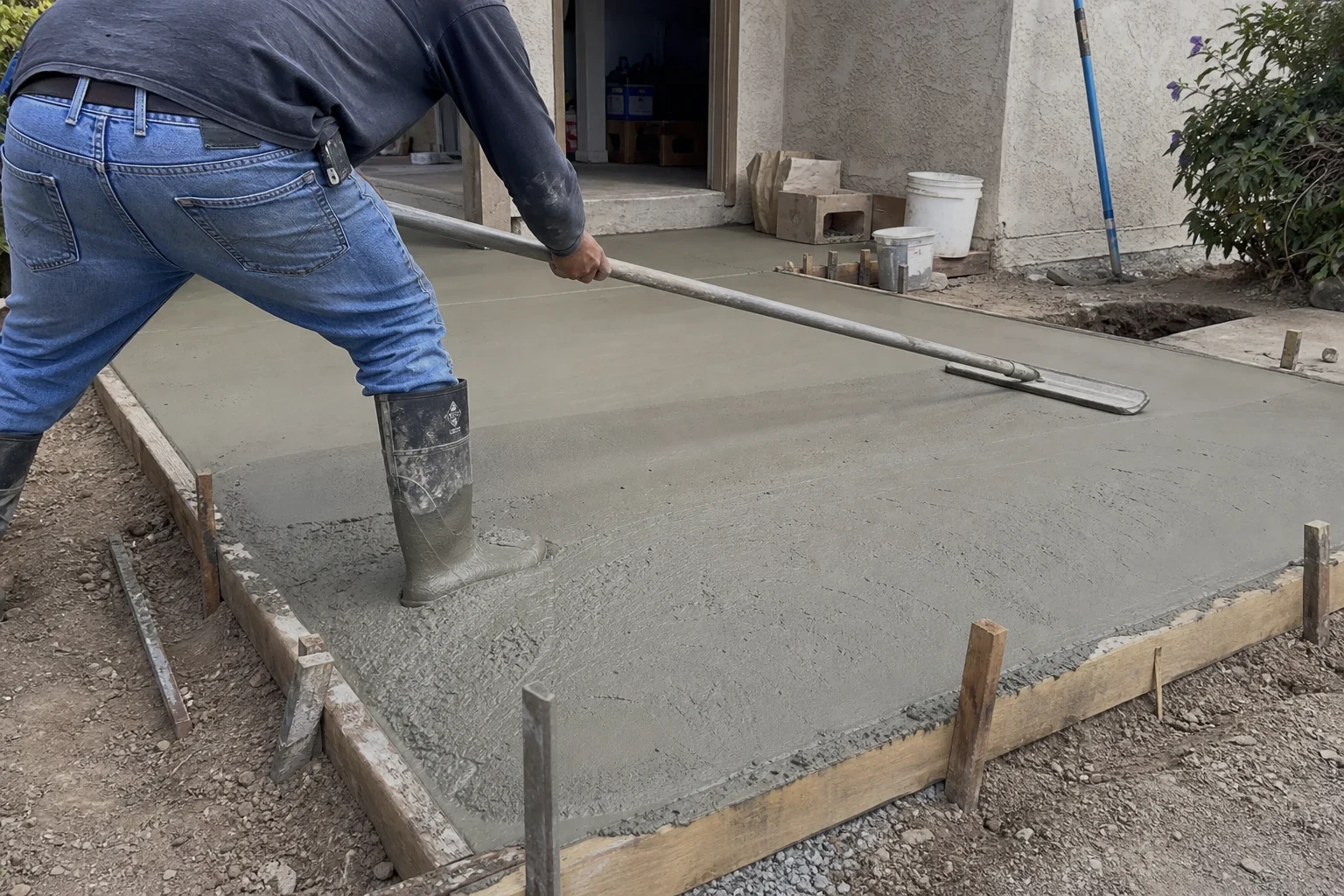
Pour and finish
Concrete usually comes in by wheelbarrow or a pump line, since side yards rarely fit a truck. We screed, float, cut joints and broom the surface the same day.
- 4
Curing and walkthrough
Give the new slab its first day or two without foot traffic, and save bins and anything heavy for roughly a week later. Your contact then returns to look over the finished work with you and answer any last questions.
What moves the price of a side yard
No two side yards are quite alike, so we price yours after we have walked it. Size and how easy the space is to reach usually matter most. Your written estimate lists each item separately, so you can see exactly where the money goes.
- Size of the strip
- A bigger footprint takes more concrete, more base rock and more hours from the crew. Long, skinny runs also call for extra form boards and extra control joints.
- Access to the space
- When everything has to be carried through a gate or wheeled around the house, the work goes slower. A pump line can speed things up, though it carries its own charge.
- What comes out first
- Pulling up old pavers, deep gravel, roots or an earlier slab adds demolition and haul-away time before any new work starts.
- Drainage work
- Area drains, downspout lines or regrading to correct a bad slope add material and labor. For many side yards, this is the part that pays off most.
- Finish choice
- A plain broom finish keeps things simple. A decorative look such as stamped concrete takes more time and a more practiced hand.
Side yard questions
- Will concrete make drainage worse next to my house?
- Not when it is done right. We slope the slab away from your walls, usually a small drop per foot, and direct the water to a drain, the yard or the street. We also keep the surface below the stucco weep screed so the wall can breathe.
- How do you get concrete into a narrow side yard?
- Most side yards are poured by wheelbarrow or with a pump line run from the street. We plan this during the estimate so you know what to expect on pour day.
- What happens around my AC unit and meters?
- We form around them and leave the clearance utility companies and equipment need. If your AC pad is cracked or low, we can talk about pouring a new pad as part of the job.
- Can the new side yard look like the concrete I already have?
- In most cases, yes. A simple broom texture is easy to line up with an existing driveway or walkway, and a stamped pattern can carry over from a patio or courtyard so the side of your home feels connected to the rest.
- How long until I can use it?
- Light foot traffic is usually fine after the first day or two. Hold off on rolling full trash bins or heavy loads across it for roughly a week while the concrete keeps hardening.
- Who do I talk to if something comes up mid-job?
- The same person who gave you the estimate. They coordinate the crew and the schedule, so one phone call gets you a real answer.
Ready to finish that side yard?
Share what the space looks like now, what frustrates you about it and what you would like it to do for you. From there, we will pick a time to come out and look at it together.