ServicesConcrete Slabs
Concrete Slabs in Orange, CA
Need a flat, solid base for a shed, hot tub, AC unit or a simple outdoor area? We form, reinforce and pour concrete slabs sized to what will sit on them, and one person stays your contact from the first measurement to the final sweep.
A slab built for what it has to carry
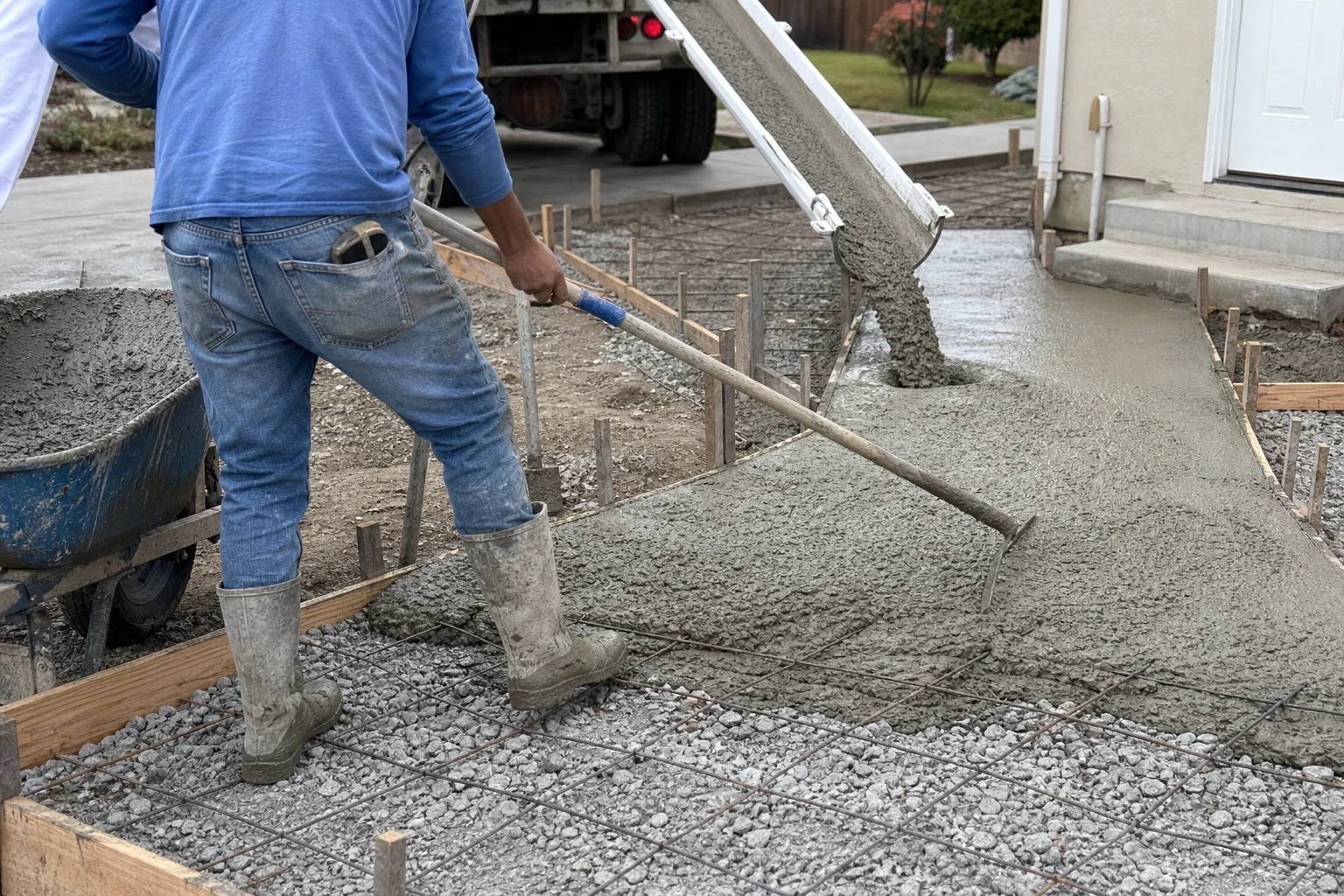
A slab looks simple, but how long it lasts depends on what happens before the truck arrives. The ground has to be graded and compacted, the base rock laid to the right depth, and the steel set so it sits in the middle of the concrete instead of lying on the dirt. Skip any of that and you get cracks, low spots or a shed that rocks on one corner.
Much of the soil in Orange County holds a lot of clay, which swells after winter rain and shrinks in the dry months. We plan the base and the joint layout with that movement in mind, so the slab stays flat under your hot tub or workshop.
You will have one person handling your job. The same contact who measures your yard answers your questions, schedules the pour and checks the cleanup at the end, so you never have to explain your project twice.
What goes into every slab we pour
- Layout and excavation
- We mark the footprint, check it against your plans, and remove sod, roots or loose fill. Then we dig to the depth the base and slab need.
- Compacted rock base
- Crushed rock goes down in layers and gets compacted with a plate compactor. A firm, even base is what keeps a slab from settling unevenly later.
- Forms and steel reinforcement
- Wood forms are set to the finished height of the slab. The rebar or wire mesh rests on small chairs that lift it off the base, so the steel ends up buried mid-depth where it does its job. Slabs carrying heavy loads also get thickened edges.
- Pour, finish and control joints
- You choose a broom finish for grip or a smooth trowel finish for a shed or workshop floor. We cut control joints so the natural shrinkage of concrete happens along straight lines you can barely see.
- A gentle slope for drainage
- Outdoor slabs get a slight fall away from your home and any structure, so rainwater runs off instead of sitting in a puddle.
- Cleanup and haul-off
- Forms come out once the concrete has set, and we haul away the dirt and debris. The area around the slab is left raked and swept.
Signs a new slab is the right call
A shed or workshop is coming
Pavers and wood blocks tend to settle on their own schedule, which racks doors and windows out of square. A reinforced slab gives the building one level surface to sit on.
You are adding a hot tub
A filled spa with people in it weighs several thousand pounds. Most spa makers call for a level concrete base, and we size the thickness to match.
The old slab has heaved or broken apart
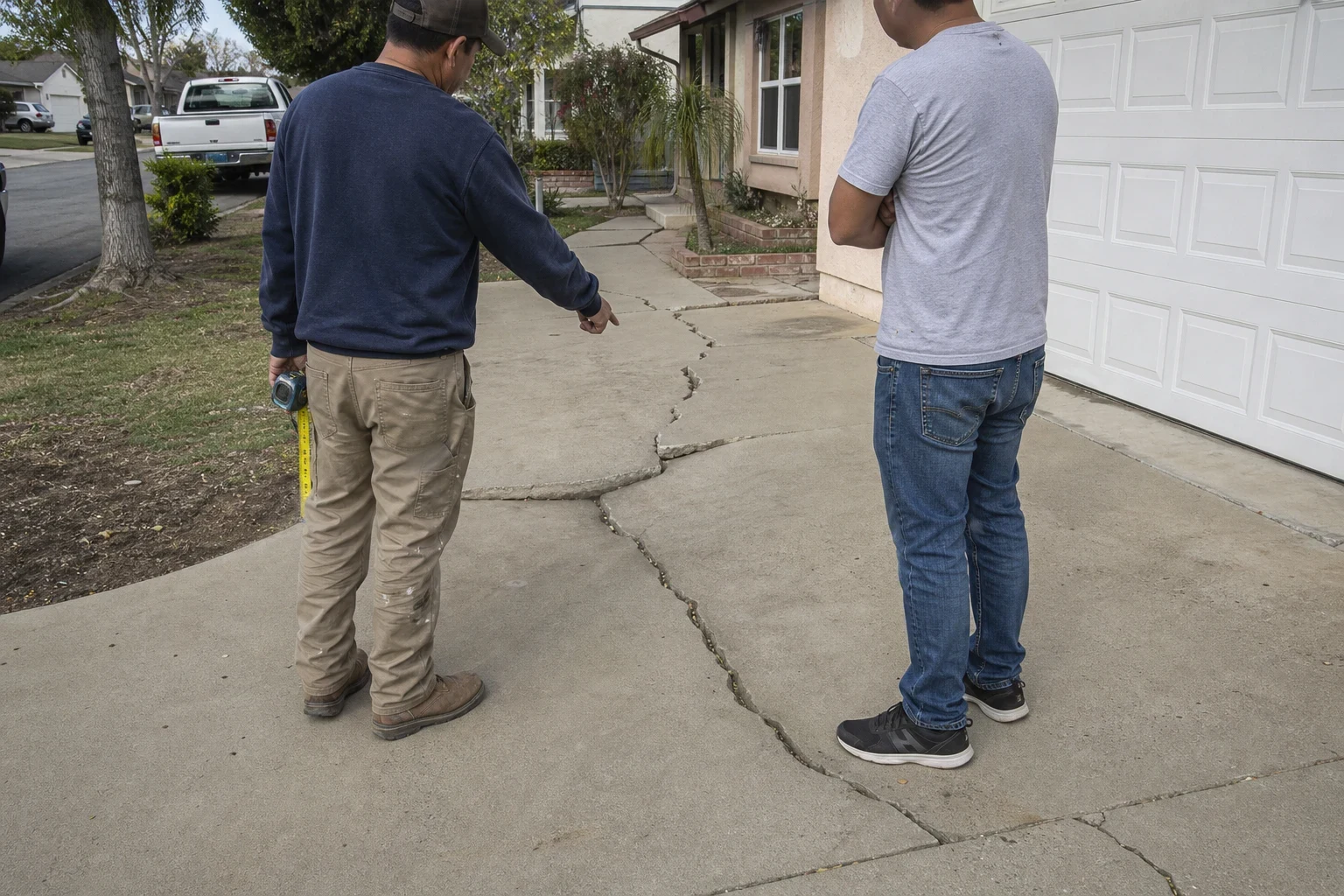
When sections have tilted, sunk or split into pieces, breaking it out and pouring new is often the sensible fix. We will tell you plainly what we see.
Equipment needs a level pad
AC condensers, pool equipment, generators and trash cans all do better on a flat pad than on dirt or loose gravel.
A bare patch turns to mud
If a spot by the back door or behind the garage gets muddy every winter, a simple slab cleans it up. For the narrow strip along the house, our concrete side yards page covers that work.
How your slab project runs
- 1
Phone call and site visit
You tell us what the slab is for, and we come out to measure, check access and look at the soil and drainage. You meet the person who will coordinate your job.
- 2
Written estimate and plan
You get a line-item estimate covering size, thickness, reinforcement, finish and any demolition. If a permit is needed, we say so up front and handle it.
- 3
Prep day
We excavate, lay and compact the base, set the forms and place the steel. If an inspection is required before the pour, we schedule it.
- 4
Pour day
The concrete is placed, leveled, finished and jointed in one visit. We will ask you to keep pets inside and leave a path to the yard clear.
- 5
Curing and cleanup
We strip the forms after the concrete sets, haul the debris and walk the slab with you. You get clear dates for foot traffic and for setting anything heavy on it.
What affects the cost of a concrete slab
Every slab is priced from its own measurements, so we quote after seeing your yard. Your estimate lists each part of the job on its own line. These are the things that move the number most.
- Size and thickness
- More square footage and a thicker pour mean more concrete, base rock and steel. A hot tub pad needs more than a pad for trash cans.
- Access to the pour site
- If a truck can reach the forms, the pour is quick. Tight backyards may need wheelbarrows or a concrete pump, which adds labor or equipment.
- Removing old concrete
- Breaking out an existing slab and hauling it away takes time and disposal fees, and depends on how thick and how reinforced the old one is.
- Soil, grading and permits
- Soft or uneven ground can call for extra excavation and base. Some slabs also need a city permit and inspection, which we include on the estimate.
- Finish and extras
- A plain broom finish costs the least. Color, a smooth trowel finish or a decorative surface like stamped concrete adds to the price.
Concrete slab questions
Something not covered here? (714) 410-5411
How thick should my slab be?
Four inches works for most sheds, small patios and equipment pads. Heavier loads like a hot tub or a workshop with machinery usually call for more thickness or thickened edges. We match the slab to what will sit on it and write that into your estimate.
How soon can I put a shed or hot tub on the new slab?
You can usually walk on it within a day or two. Lighter items can go on after about a week, while heavy loads like a filled spa should wait longer, since concrete keeps gaining strength for about four weeks. We give you specific dates for your project before we leave.
Will my slab crack?
All concrete shrinks a little as it cures, so fine hairline cracks can show up. Control joints guide that shrinkage into straight lines, and the steel and compacted base keep the slab tight and level. What you should not see is pieces lifting or sinking.
Do I need a permit for a slab?
It depends on the size, the location and what the slab will support. We check the requirements for your address in Orange and pull the permit when one is needed, so you do not have to sort that out yourself.
Can a new slab go in the same spot as the old one?
It can. The job starts with demolition: the existing concrete gets broken up and trucked off, then the base is rebuilt and compacted before the new forms go in. Removal shows up as its own line on your estimate, so you know exactly what that part costs.
Do I need to be home on pour day?
Not for the whole day. We just need access to the yard and an outdoor water spigot, with pets kept inside. Your contact will call when we arrive and again when we finish.
Tell us what the slab needs to hold
Describe the shed, spa or equipment you have in mind, and the person who will run your job will plan the size, thickness and next steps with you.